I love cute animals. Once, I bruised a friend’s arm because I squeezed it that hard when a pair of Brussels Griffons walked past. But it was only when Instagram deployed its “Explore” page in June that I began to worry.
The early “Explore” grids on my account were a mix of fashion images peppered with a few shots of celebrity pets like Grumpy Cat. But the algorithm quickly figured out what I really wanted. My click habits were saying, “Ditch the shoes and show me Pomeranians.” Suddenly browsing Instagram became like holding an Upper East Side doggy daycare center in the palm of my hand – one that also housed sloths and pandas.
It’s only gotten worse. Over time, the evolution of the animals on my Instagram feed has run counter to all evolutionary logic. It is survival of the least fit, the strangest looking, the animals with the biggest overbites, largest eyes, and most cartoonishly compact bodies. I became worried about the chinchillas being made to push tiny shopping carts across my screen, the Pekingese wearing makeup and the Scottish Folds that looked more like tiny ottomans than cats. So I called the ASPCA.
Here is what I asked Cori Menkin, the senior director of the ASPCA Puppy Mills Campaign: Is there a danger that the popularity and money-making potential of cute animals on social media is fostering a culture of irresponsible breeding, abandonment and exploitation? Famous Japanese Scottish Fold Maru allegedly generates $180,000 in profits annually through her YouTube channel. And when we see freakishly cute animals on Instagram, isn’t that driving up the demand for breeds that are being engineered for their cuteness, and doesn’t that come with all sorts of problems? (Clearly, Instagram isn’t the only provider of cute animal content, but earlier vehicles like kitten calendars weren’t nearly as effective at launching animals into stardom as a handheld platform with a user base of over 300 million.)
Sadly, my concerns were valid. Cori used the example of dogs that are bred to look like teddy bears (often cross-breeds between Bichon Frises and Shih Tzus). “Who doesn’t want a little tiny puppy that looks like a teddy bear? They’re adorable.” I nod over the phone. “And that’s why, certainly, they have so much appeal on social media, on Instagram, on Facebook. There’s no way to look at a face like that and not want it. Unfortunately, the breeders count on that. They’re able to turn these puppies out, en masse, and they’re able to sell them at very high prices.”
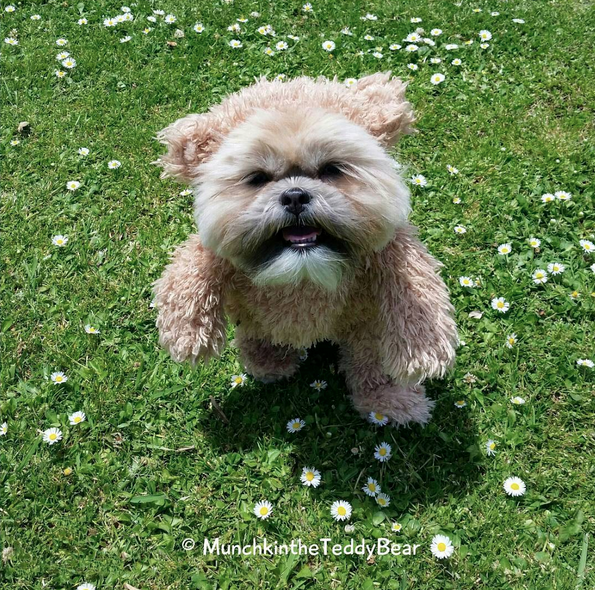
There are two obvious dangers at the end of this chain of supply and demand: 1) A misperception of animals as products or toy-like bundles of cuteness, rather than living creatures with real needs, and 2) Breeding practices can become less responsible, leading to genetic defects and significant medical problems.
When “trends” for certain breeds emerge, explains Menkin, “Breeders know they can make more money, so they’re just going to churn out more and more and more, and that means they’re not going to be diligent about taking problematic genes out of the gene pool.”
One example is the bulldog. (On Instagram, #bulldog has over 5 million posts, the most of nearly any dog breed.) According to breed website BulldogsWorld.com, over 90% of bulldogs now have to give birth via caesarian section. This is because the dogs have been bred to have such disproportionately large heads that mothers can’t give birth to puppies without surgical intervention. “I think it should be telling us something if we have animals that can’t give birth naturally,” says Menkin. She lists other side effects of irresponsible breeding as “hip and joint problems, congenital defects and digestive problems.” And in small breeds like chihuahuas (#chihuahua: over 8 million posts, easily the most of any major dog breed), she says a painful joint problem called luxating patella is becoming more and more common. It causes the animals’ knees to pop out of their sockets, something which, again, can only be fixed surgically.
Breeding animals for aesthetic characteristics is not a new trend, though, says Dr. Richard Goldstein, the Chief Medical Officer of Animal Medical Center in New York – the results are just more visible thanks to social media. “This is a continuation of what’s been going on for several hundred years. It’s probably more common now, and in vogue, but it’s not completely new.” The concept of breeds is in fact entirely manmade. “If you let all dogs breed naturally, you’d get 40-pound brown dogs that all look alike,” Goldstein says.
But people today care more about what their pets look like, he argues. “Pets are members of the family now. It’s not like in the old days when the dog was out in the shed and no one really cared what it looked like.” And, he adds, if animals are being bred “purely [for] aesthetics, and it’s done in an irresponsible way, then you’re going to come up against a lot of issues.”
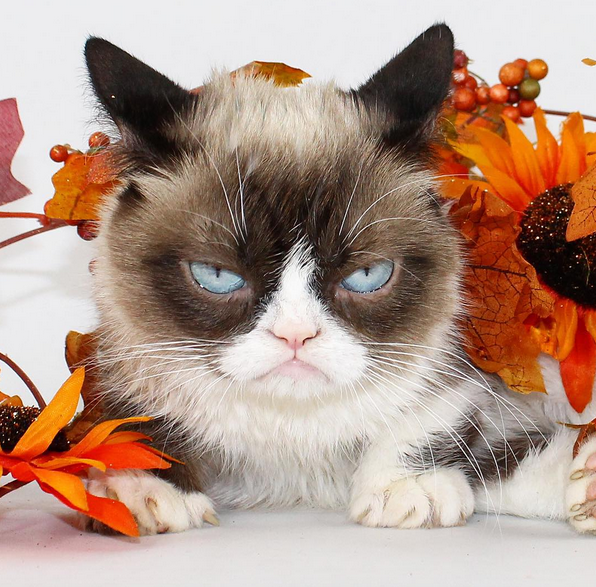
The rise of celebrity pets on social media is the ultimate expression of this shift in the way we think about animals. To clarify: we’re talking about pets that are celebrities, not the pets of famous people. Of course, famously cute animals pre-date Instagram. The phenomenon has been around since the early days of the Internet, and at least since Mr. Winkle – perhaps the original celebrity dog – upstaged Carrie Bradshaw at her own book signing. But Instagram has enabled new levels of exposure and marketability for animals and their owners. Take Grumpy Cat.
Grumpy Cat (née Tardar Sauce) came into the world meme-ready. Her face – scrunched by a severe but strangely endearing underbite – and her permanently kittenish size (she has feline dwarfism) have earned her Instagram account, @realgrumpycat, a following of nearly one million. She now tours the country, making stops at SXSW, football stadiums and magazine offices to promote her coffee brand and book. In 2013, she became so ubiquitous that one blogger launched a campaign to #FreeGrumpyCat. Mike Isaac wrote on his website, AllThingsD, “If I were a grumpy cat, the absolute last place I’d want to be is stuck in the middle of a 24-hour party for days on end, where throngs of drunk partygoers waited for a chance to take a picture with me.”
I called PETA to find out what its stance is on animals like Grumpy Cat. “The primary factor in these situations is that the needs of the animals are being put before the idea of making money,” answered senior campaigner Ashley Byrne. Note: in December 2014, the Daily Express reported that Grumpy Cat had made her owner, Tabatha Bundesen, over $100 million over the previous two years (a figure since disputed by Bundesen).
Byrne continued, “human performers are making a choice to be involved when they’re part of a spectacle, animals aren’t. It comes down to seeing each animal as an individual, not a product, not a breed.” Of course, that’s up for debate in the case of Grumpy Cat – partly because she already looks so miserable that it’s hard to read her face for signs of discomfort – yet, surely, the question should always be, “Why put an animal through unnecessary stress?”
But Byrne also pointed out the many positive effects that social media has for animals. PETA itself posts frequent cute animals videos, and she argues that viral internet sensations, such as “Have You Hugged Your Chicken Today?“, encourage millions of people around the world to sympathize more with animals. “By introducing viewers to the intelligence and friendliness of animals like chickens or cows or rats or pigs – animals that are less familiar to us than cats and dogs but are just as deserving of kindness.”
The flip side of this phenomenon though, is when popular videos of exotic animals increase demand for creatures whose natural habitats are clearly not American living rooms. That video of the slow loris being tickled, it turns out, may not only have been inhumane – this summer, International Animal Rescue launched a “Tickling Is Torture” campaign – but it may also have contributed to a poaching problem in the forests of Borneo to feed the sudden frenzy for the adorably bug-eyed tiny primates.
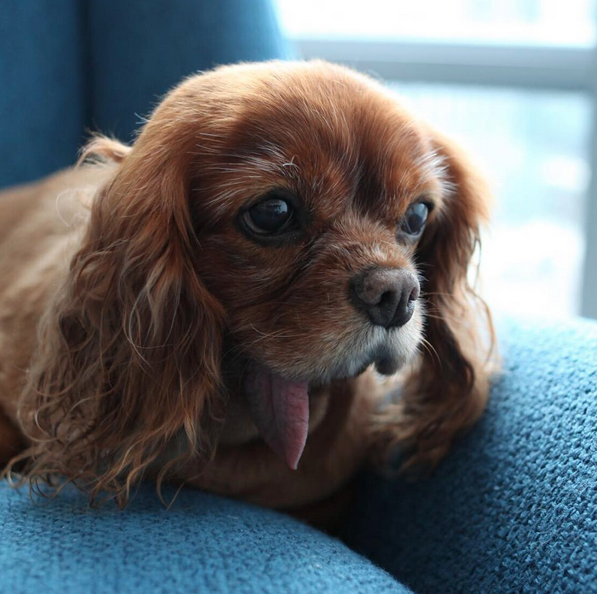
So what’s an Instagram animal lover to do? Choose who you follow with care. As Byrne points out, social media also has the power to do amazing amounts of good when it comes to animal welfare. Comedian Josh Ostrovsky (aka The Fat Jew) and co-parent Katie Sturino, for example, created an Instagram account for their dog Toast, a goofy-tongued King Charles spaniel, to raise awareness of the cruelty perpetrated by puppy mills. The account @toastmeetsworld advertises the dangers of irresponsible breeding to over 300k followers, using the hashtag #StopPuppyMills. And, of course, if that video of mewing kittens you watched for an hour on loop last night does make you want to own an animal, make it a domesticated rescue and not a mill animal or, you know, a sloth.
Credits
Text Alice Newell-Hanson
Image via @realgrumpycat