
Together, Benny and Josh Safdie carved out such a specific niche that their surname became synonymous with it: high-octane, high-stakes movies that don’t let up until the credits roll. There were Uncut Gems and Good Time—two brilliant films that throbbed from the screen and stole your breath. This year, they’re parting ways for their solo debuts. Is that energy something they share?
If Benny has that supercharged spirit in him, he’s very good at suppressing it as a standalone filmmaker. His film The Smashing Machine, which just premiered at Venice Film Festival, has a gorgeous eye for all that’s glowing and intense, but an unexpected melancholy too.
Starring Dwayne Johnson in the central role, it follows the career peaks of Mark Kerr, a real-life UFC fighter who was one of the pioneers of the gory sport. It’s the late ’90s, and Mark—living in Arizona with his gorgeous, underappreciated girlfriend Dawn (Emily Blunt)—has a clean winning streak. But when an unexpected defeat derails him, he’s forced to take stock of what victory really means.
I was expecting something akin to a Rock ’Em Sock ’Em Robots movie: nicely shot, competently written and directed, juicing me up for two hours and letting me live on that high. Instead, the film flips that coin, delivering its own emotional gut punch.
At the tail end of the ’90s, UFC reached a new level of popularity in Japan with the Pride tournament, before it fully took off in the States. While there, in an antiques store, Mark finds a broken bowl repaired with the art of kintsugi—filling the cracks with gold to make it whole again. It becomes the film’s central symbol: of Mark himself, a bruised and damaged man literally stitched back together after leaving the ring, and of the relationship he’s trying to maintain as he goes through this moment of tumult.
What guides him is opioid painkillers. When he asks for medication after a Pride match and is offered Advil, he laughs it off like it’s candy. Only something that takes him to the brink can take the edge off.
From this point on, as he’s confronted with the possibility of reclaiming his title and winning a life-changing sum of money in a Grand Prix tournament, we think we know where a film like this is going—because we know the glory stories. But The Smashing Machine isn’t hulking in the way its title might suggest; it proves elegant and sensitive, a redemptive tale of a different kind.
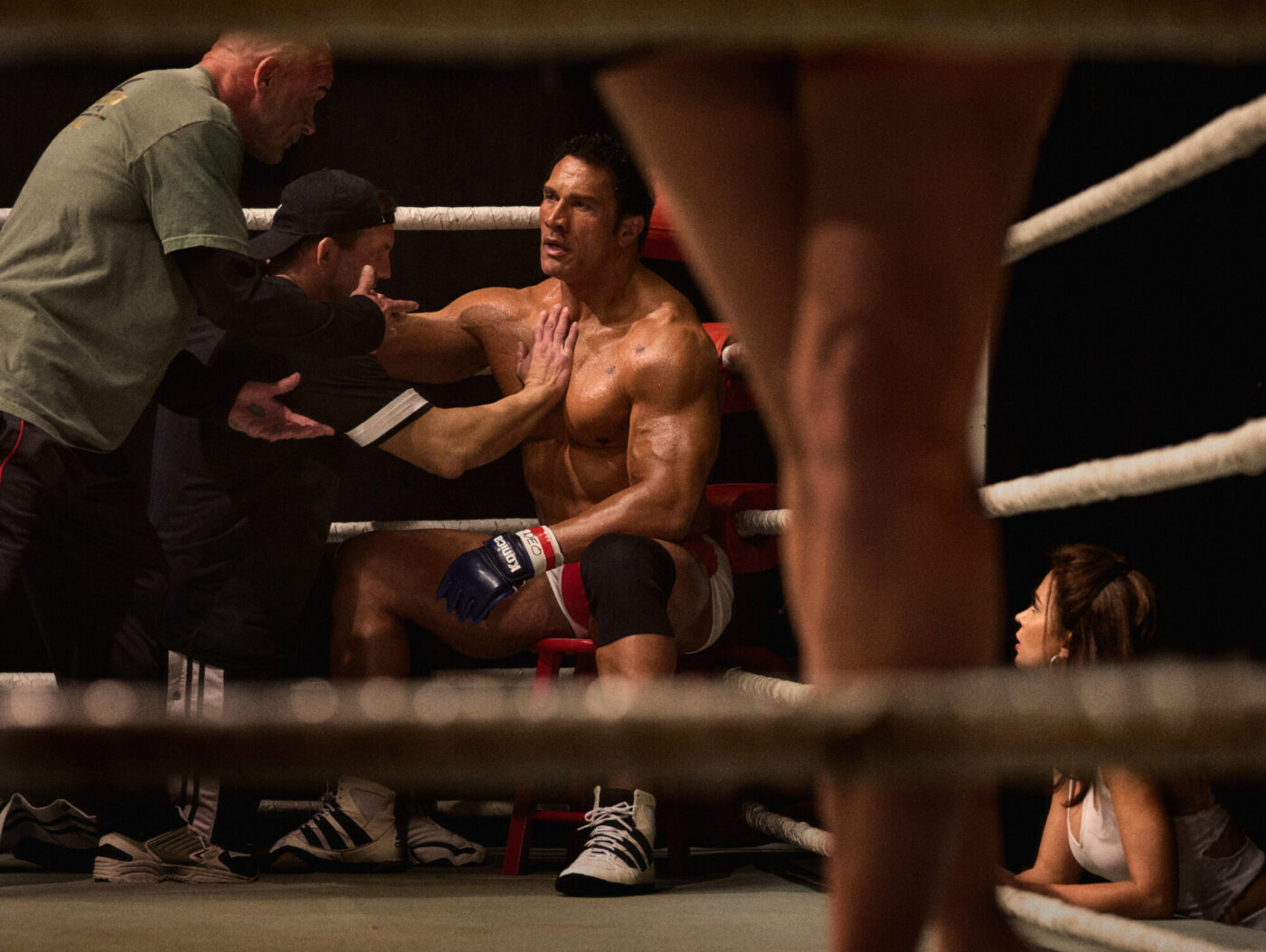
Perhaps that’s because Safdie treats it like a love story. The score is a fluid, free-jazz composition by British composer Nala Sinephro, who is 29 and has never worked on a film before. Maceo Bishop’s cinematography is piercing in sports mode and lustrous and romantic outside it. A scene at a fairground, in which Mark and Dawn reunite after a time apart, features one of my favorite shots of the year: Dawn, riding solo on a spinning UFO rotor, her body splayed out as she grins with joy. As Dawn, Blunt turns in the kind of performance she’s become known for: the scorned partner of a tricky lover. If she was stern and firm in Oppenheimer, here she’s mouthy and expressive. She’s magnificent.
Opposite her, Dwayne Johnson—best known for his schlocky box-office hits—finds a way to burst out from under his (very good) prosthetics and take hold of this character. You could say Mark is ungiving, a himbo, but there’s a warmth Johnson knows so well in real life that helps inform him fully.
Far from the likes of Rocky and Southpaw, The Smashing Machine instead finds bedfellows in films like The Rider, Oscar winner Chloé Zhao’s sophomore feature about a lonely American bronco rider starved of his ability to ride. Mostly unbothered by what people expect from it, Safdie’s film is sad, often mellow, and remarkable—a story about the pursuit of victory, and whether it’s even worth pursuing at all.