‘All artwork/artists featured in this exhibition were conceived and created by one artist.’ This was casually stated in a special online press release that visitors were encouraged to click on via a provided URL link on the physical press release on the opening night for Art Basil. On the 4th July this year, an audience gathered in attendance to what they thought was a group exhibition of young and upcoming artists at Cob Gallery in London. The invite and press release suggested that the exhibition was a collection of works by five artists still immersed in either their undergraduate or postgraduate studies. On the surface, the exhibition set out to reflect the current British artistic climate in art schools across the country. There were clues, however, on the night as to what was really going on. For one, none of the included “artists” were present. That’s highly unusual. The other key clue was of course the online press release that revealed the truth of the situation.
So why go to all this trouble to conjure up and present the work of five fictitious artists? It all started with a conversation I had about eight months ago with my close friend, and artist, Tristan Pigott. We started off talking about the artist as curator, as Luc Tuyman’s curatorial offering of Belgian abstract art at Parasol Unit was still fresh in our minds from visiting it together in November. Tristan was known chiefly as a figurative painter at that point having had a very busy summer with his paintings included in both the Royal Academy Summer Show and the BP Portrait Award. Although he felt initially positive about the whole experience, Tristan was concerned about being pigeonholed as an artist; the all too predictable painter. A break from figurative painting was required. Rather than drastically changing stylistically, curation offered another more feasible and logical avenue for Tristan. We spoke for a while about the kind of art and artists we could put together and about the British contemporary art landscape. But in light of Tristan’s concerns about broadening his abilities as an artist combined with the struggle to find artists we felt reflected the themes we wanted to explore (which we will come to soon), a light bulb lit. Why not get Tristan to create all these different ideas, in different mediums, through different artist aliases? It would provide the necessary freedom for Tristan to try out completely new ideas and allow him to work with other mediums like installation and sculpture that he otherwise would not have been able to present in the gallery context. No gallery would even entertain the idea of him trying out all these approaches in a solo show under his name.
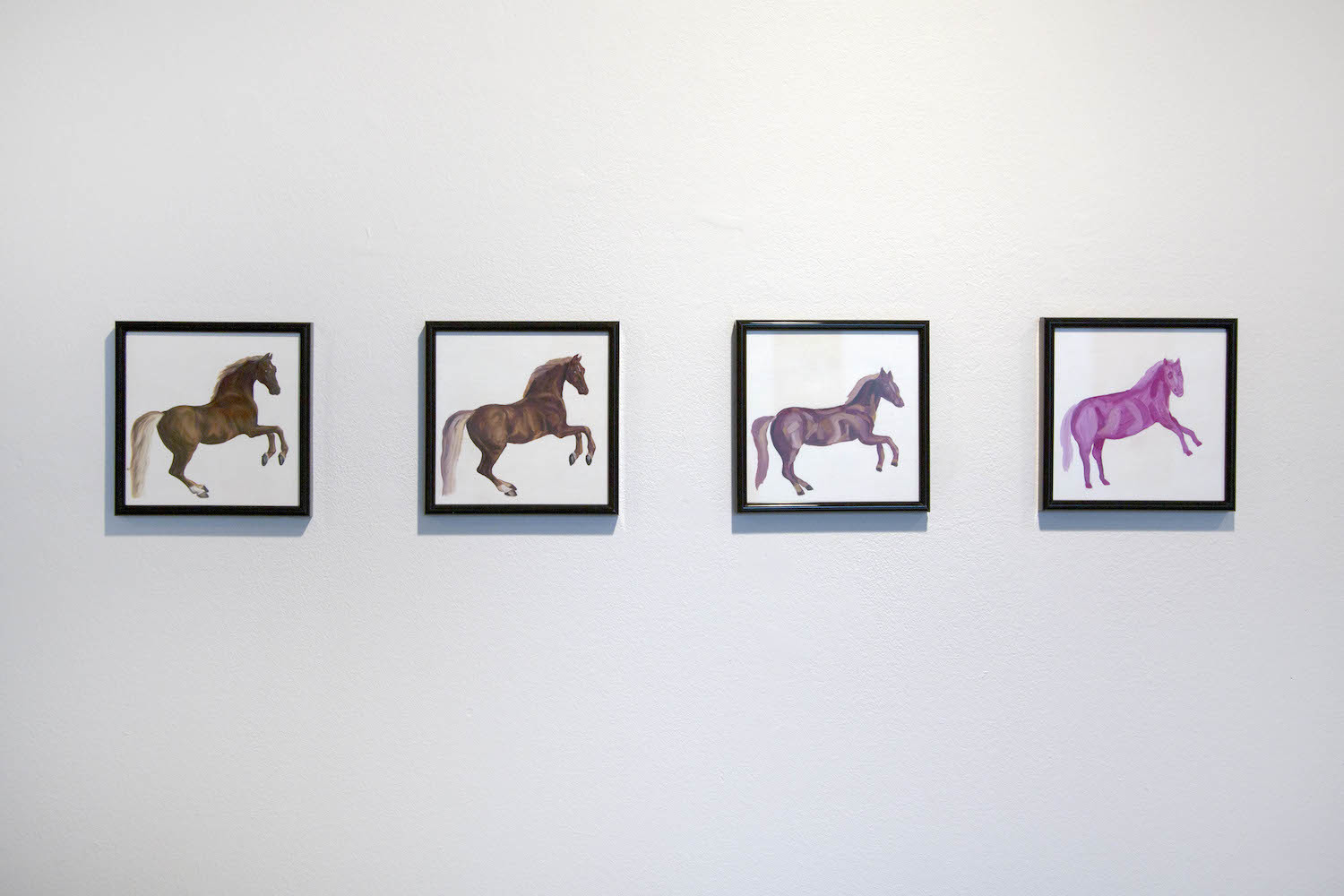
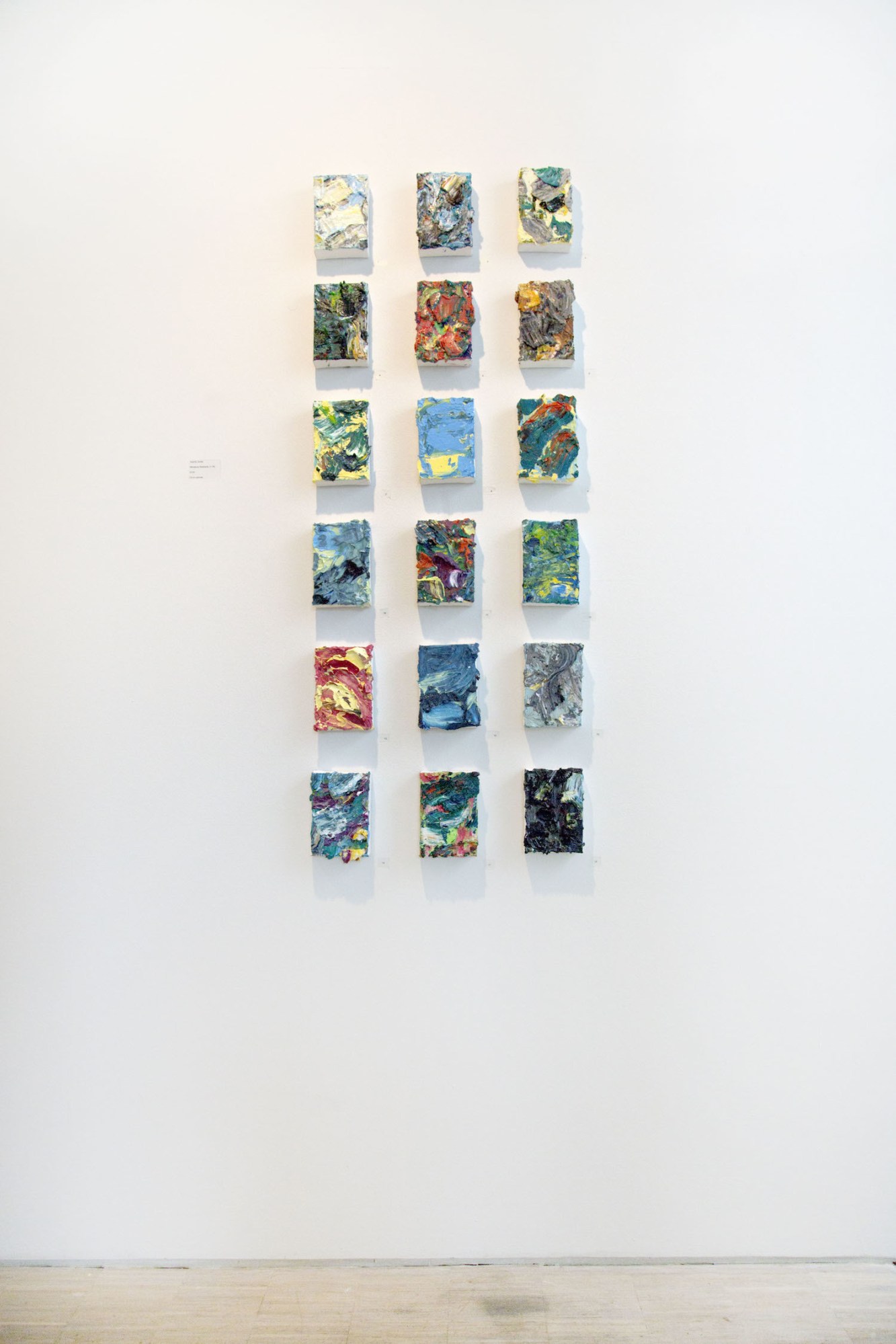
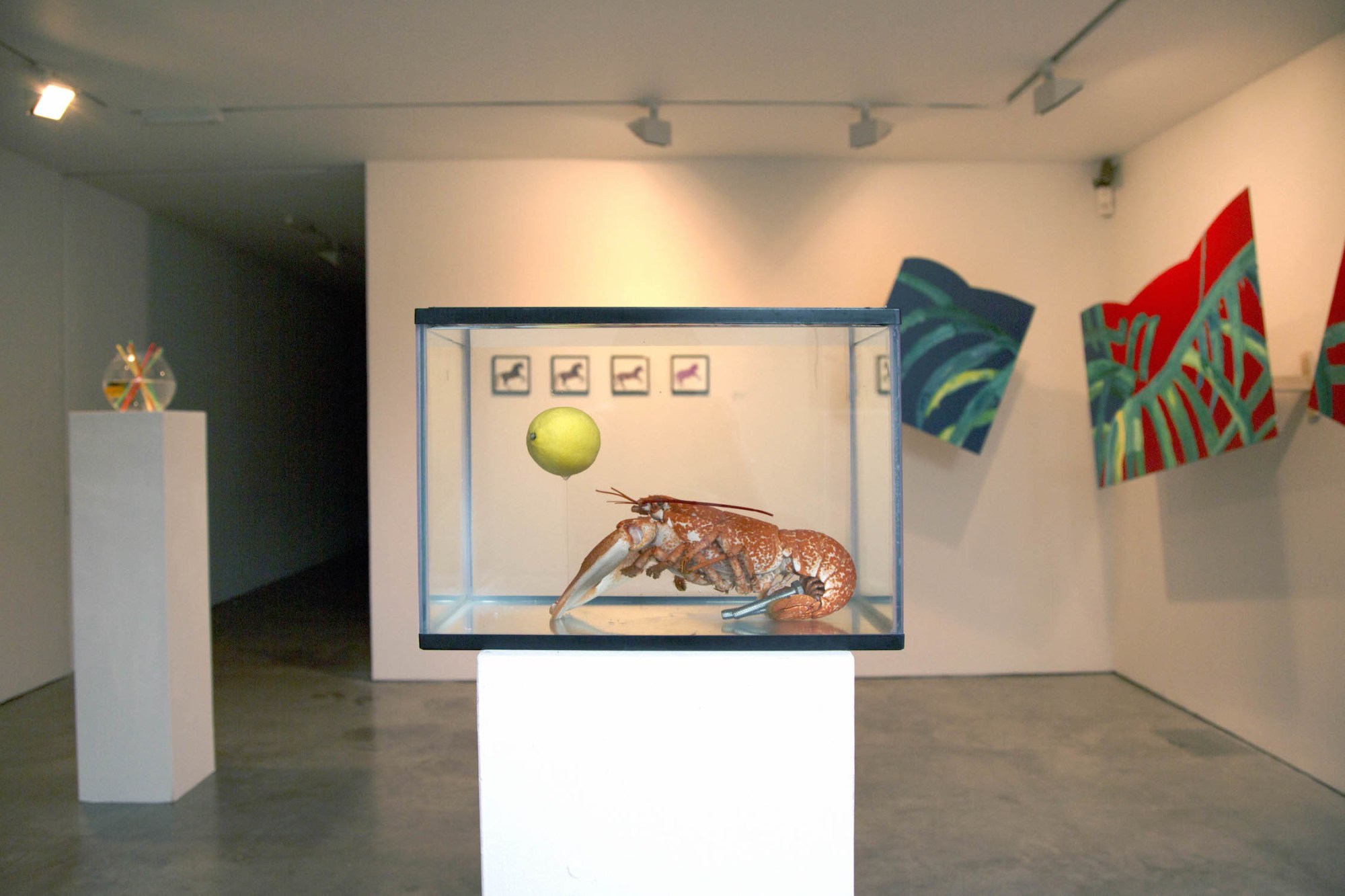
Once we decided to create all these different artworks under different aliases, we settled on there being five artists. For each fake artist we created websites with installation images of “previous exhibitions” we had staged, full CVs including fake educational history and previous exhibitions, and got actors to sit for portraits to go on the website home pages. Each fake artist had their own artistic interests but were ultimately linked together through themes around audience engagement, displacement, institutional convention and ego. For example, the fake artists David Hurt and Sophie Jones both had artworks that attempted to engage the viewer (Hurt’s Dead Straight featured an interactive dartboard with images of US presidential nominees and Jones’ Miniature Abstracts (1-18) were available to bid on eBay via a live projection during the private view opening) but were coming from different places.
The most interesting part about creating these fake artists was the conversations we had about them to friends, colleagues and the media in the run up to the exhibition. It became a performance piece in itself. The only people that knew what was going apart from the gallery were Tristan and I. Everybody else we talked to thought that this was going to be an exhibition of five young British artists still at art school curated by Tristan and myself. We’d prepared stories and background for each artist so when asked to go in depth about them we had uniform answers at the ready with internet profiles to back them up. The most enjoyable part of creating these fake artists for Tristan was the actual making of the work because all consequence was placed on the alter egos. “Any rules that had been subconsciously built into my usual practice became non-existent,” Tristan said. “Having total control thematically and visually made life a lot easier too!”
With regards to pitching the exhibition to the media, we created a fake press release. This press release had the URL link on the bottom that revealed the ruse and was also the press release used for the private view opening. Unsurprisingly, the majority of the mainstream media didn’t respond, as the exhibition presented to them appeared fairly ordinary (five unknown artists still at art school). Plus, it was a test to see whether or not any of those journalists would actually read to the bottom of the press release and then click on the URL link to find out the truth. No surprises there! It also acted as a test with regards to the audience on the opening night. Now, this was a surprise. Despite the various distractions on the night (the free alcohol, the people, the interactive artworks, the free alcohol…), some of the visitors actually pursued the provided URL link to find out what was going on. One visitor told me that the whole experience was like watching Fight Club.
The attendance and engagement on the night was completely unprecedented. These aspects were not our only concerns beforehand however: will no one get it? How do we make sure it’s kept a secret the whole time? How do you price and indeed sell work by an artist who doesn’t exist? What we learnt on the opening was that in the gallery exhibition context, people don’t want to feel as though there is a barrier between them and the work. Whether that’s intellectually or aesthetically, the work that was included in the show certainly had depth to it but was by no means intimidating. This was perhaps the key to the success of the show once people were there. In terms of why they turned up in the first place, well, I’m sure it was the free alcohol…
But the most special part of the night, for me, was the live eBay auction. There were 18 miniature abstract paintings on one wall, numbered, and the eBay auction projection on a wall nearby. Bids started at 99p and it acted as an attempt to reevaluate the worth of an art object. Visitors were encouraged to spend at least £5 to cover the material costs. Everything sold. What this did was attract people who not only didn’t own a piece of art, but who weren’t even necessarily your everyday art enthusiast. The bidders didn’t even care who painted it or why it was painted. They just loved the painting. It was amazing to see all sorts of people crowd around the paintings and discuss them together. This is, ultimately, what it was all about. It didn’t matter who the artist was or if that artist was viewed to be ‘the next big thing,’ what mattered was if the art was any good or not. In an age of personal promotion through social media, it seemed as though the public welcomed a break from the cult of personality inherent in today’s world.
Credits
Text Tish Weinstock