
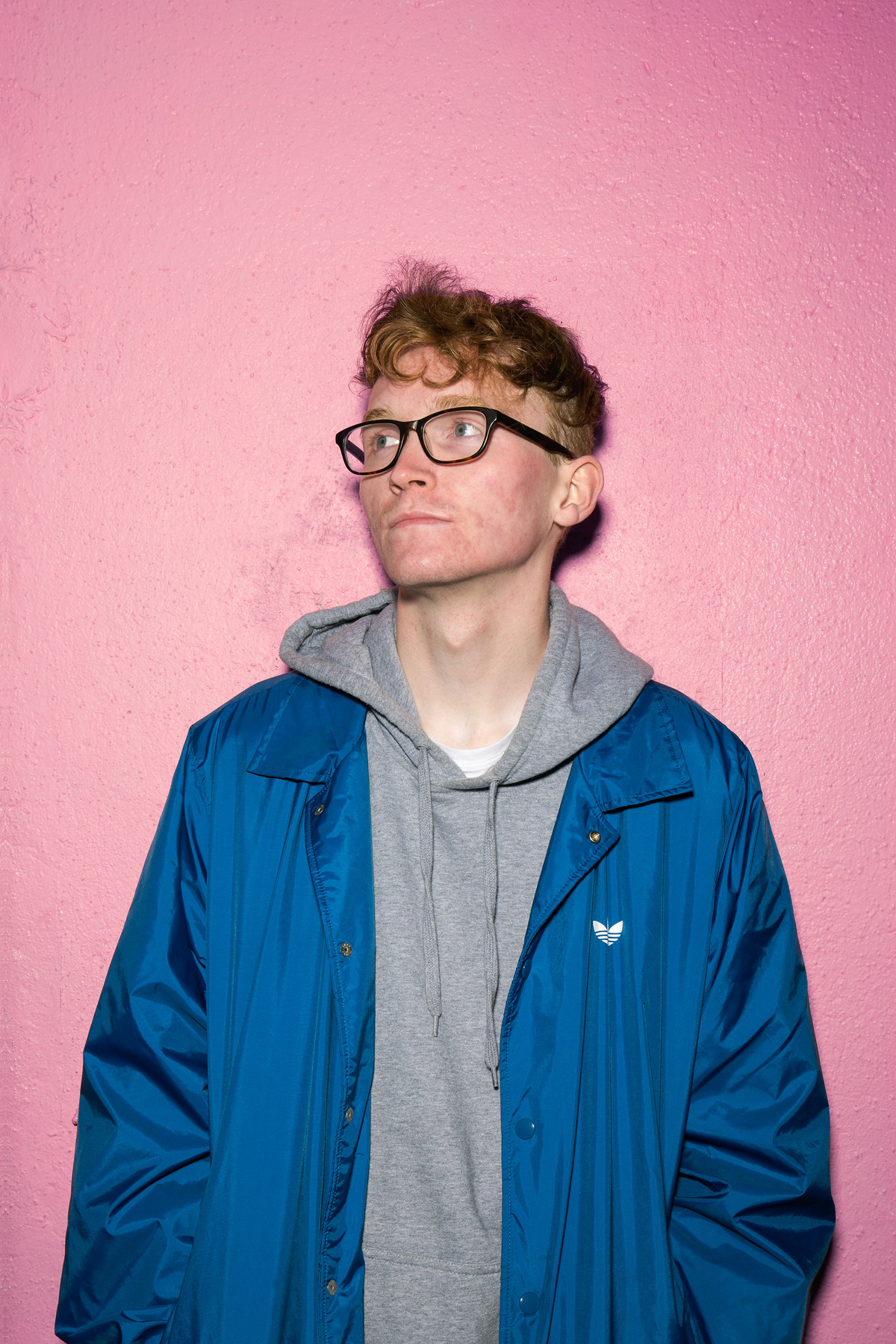
Lontalius aka Eddie Johnston, is the 18 year old New Zealand singer/songwriter spending the late night hours writing and recording songs of reflection for his generation. He first caught ears across the globe with his greyscale Casiotone covers of chart toppping rap and RnB songs, which he quietly uploaded onto his SoundCloud capturing fans like internet producer prince, Ryan Hemsworth. Of late, it’s Johnston’s romantic, vulnerable and strident originals that have been the talking point – triangulating classic pop-rock structures, nu wave RnB melodies and increasingly polished 90s/2000s indie rock aesthetics. Slow and subtle growers, his songs perfectly encapsulate the anxiety and excitement of growing up, coming to terms with love, and finding your way in the world and world wide web.
In addition to Lontalius, Johnston makes electronic music under the alias, Race Banyon. He’s performed at summer festivals across New Zealand and shared bills with the aforementioned Hemsworth as well as Baauer, Rustie, and Kaytranada. In May of this year he visited the UK to record and mix his debut album with engineer/producer Ali Chant (P J Harvey, M. Ward, Perfume Genius) at Toybox Studios in Bristol. Having just been announced as one of the two New Zealanders who will attend the 2015 edition of Red Bull Music Academy in Paris, i-D sat down with the future star over salted caramel hot chocolates at a cafe in his native Wellington.
What is the year about for you?
It’s a transitional year. Next year my album will come out, and I’ll be away for most of the year, theoretically. A lot of things have happened this year that validate me not going to university, which is really great. Getting signed to a label was a big thing. It just happened so easily. We also had interest from other labels who I’ve looked up to my entire life. Even just having them email us back confirms I’m on the right path. Getting accepted into the Red Bull Music Academy was huge as well. I’ve always thought I was completely capable of being accepted – but I didn’t think I would get accepted the first time I tried.
A few years ago your music as Lontalius was very lo-fi and you delivered your vocals with a mumble. These days your music is clear and confident. What changed?
The lyrics I was writing when I was mumbling weren’t about anything. They were mostly words that vaguely formed sentences. Once I had enough life experiences, I felt like writing about real things, and I wanted my lyrics to be heard more. A turning point was when I got sick of lo-fi music. I hate listening to it now, because I can’t hear anything in it properly. I thought, why not have the vocals as the loudest thing?
What did you like about lo-fi music at the time, and why did you lose interest in it?
I think lo-fi music was what helped me realise that people close to my age were making great music in New Zealand. When I was twelve, I went to an all-ages show and saw four local bands that I liked. I thought that was really special. Before then all I’d seen live was Elton John and Crowded House. I saw too much lo-fi music in my early teens though. I think one of the benefits of starting early is I became jaded about five years before everyone else my age.
A while ago you told me you wanted to release a book called The Last 12 Months or How Cultural Appropriation In Electronic Music Made Me Too Stressed Out To Make Electronic Music. Could you expand on that sentiment?
I just became too aware that every type of music I liked came from black people, gay people and immigrants. I found it really difficult to reference different types of music, which is something I like doing, without it coming off as appropriation to me. Trends are such a big thing in electronic music as well. I like grime music, but I don’t want to touch it [as a producer] because at the moment it’s the thing people are appropriating. Seeing that happen just makes me want to run away.
What do you think electronic music producers could do differently to be more respectful?
The trend thing is a real problem. It means everyone will make a trap song; then they will stop making trap songs. It becomes a throwaway thing people do for three months. That becomes problematic. People should just play original music more. When I performed [as Race Banyon] at the Rhythm & Vines festival [in New Zealand], I noticed that everyone played a remix of a 2Chainz song, but no one played a 2Chainz song. Doing that makes it all about you, not them. A lot of it comes back to the crowds and what they enjoy too.
On the flipside of that, you’ve just finished recording and mixing your first proper album as Lontalius.
It’s so much easier for me to make that music. It’s definitely inspired by people like Drake and other RnB artists, but the core of it still relates back to music I was listening to when I was growing up like The Beatles. That is what is engrained in my head, and I find songwriting a lot easier than producing.
In saying that, I’m really inspired by production techniques from hip-hop and RnB. Drake’s sense of melody has had such a profound effect on my sense of melody. His are really simple and his producer 40 has such an incredible sense of harmony and chord progressions. The combination is what I’m drawn to. Whatever I write will sound like it’s inspired by Drake to me, but at the end of the day I’m still singing about my own experiences and my own life. I’m not just taking.
In interviews, Drake has said that 40 hears things the same way he does. Have you found anyone who hears things the same way you do?
Yeah, my friend Ike. Me and Ike are pretty much the same person in terms of that. I make music I love, and I love listening to my music, but I still made it, so it’s hard to listen to it objectively. Ike is from Golden Bay in the South Island [of New Zealand]. I met him on Tumblr because he was a fan of my music. We became friends, and I started sending him music. He moved up here, and now we hang out all the time.
Tell me about the role of Tumblr within your life?
As a platform, Tumblr lends itself to honesty. You can write things for as long as you want. I’m just rambling my thoughts on there. On twitter if I try and say something in 140 characters I’m obviously going to offend someone. I pretty much met all of my best friends on Tumblr. It’s really interesting because I don’t really like the website that much, but I’ve started so many amazing friendships on there. I don’t think anyone over 22 follows me on there; it really is a space for my generation.
Can we talk about how beauty works within music for you?
The thing in music that gets me the most is melody and harmony. Harmony is the bigger one for me, the way the melody and the chords react. Even when I do covers and remixes, it’s all about taking the melody that everyone knows and putting it against different chords. That can completely change the way a song feels. I fell in love with that. That is the most beautiful thing in music I think.
Credits
Text Martyn Pepperell
Photographer Russell Kleyn
Stylist Zoey Radford-Scott