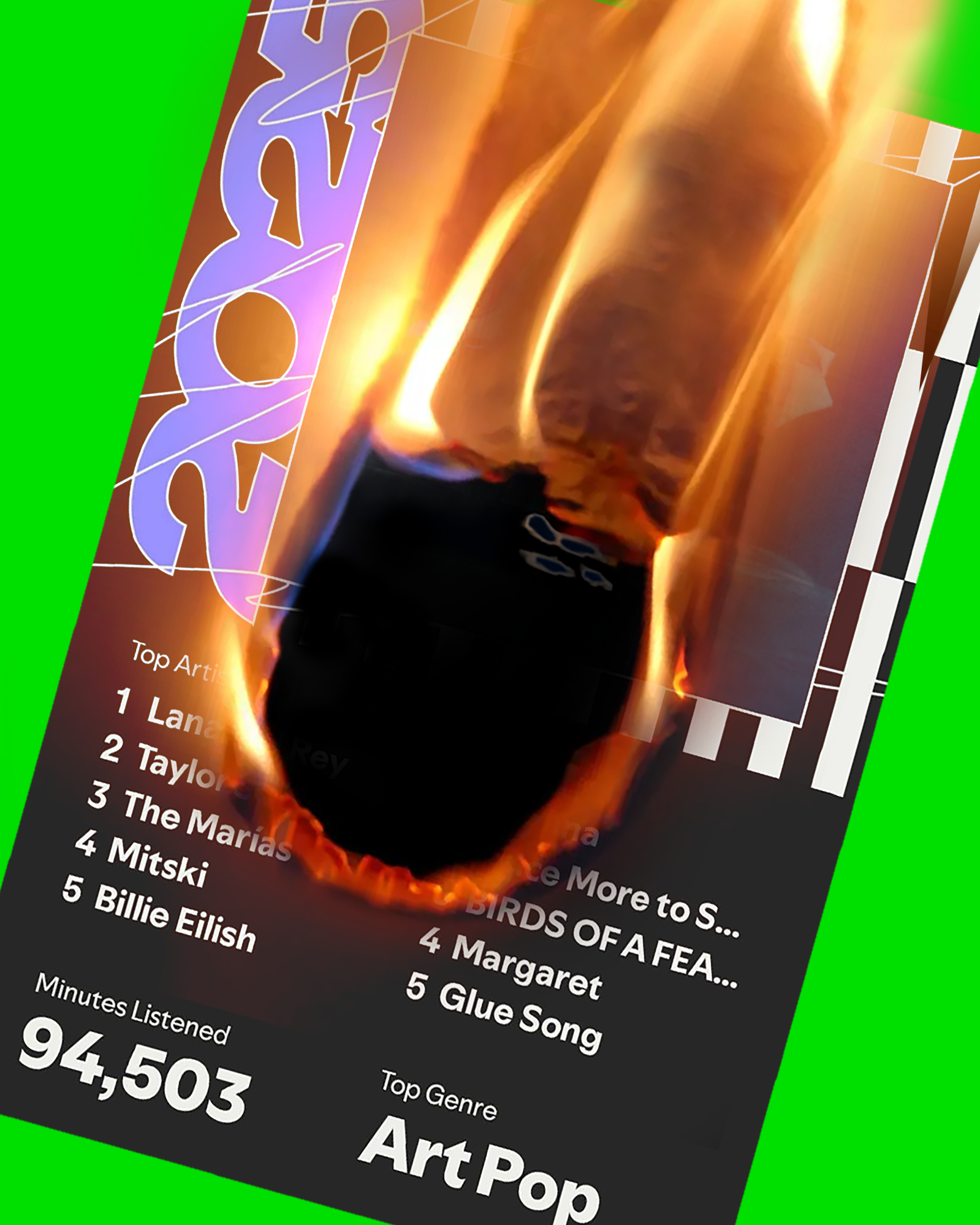
A few weeks ago, I cancelled my Spotify subscription. I was a paying Spotify user for over a decade, and during that time I used it pretty much daily. I still remember the day when Spotify first washed up on our shores from Sweden in 2011 and quickly, almost instantaneously, changed the way that we (over 600 million daily users and counting) listen.
I also remember wondering how such cheap, comprehensive access to music could be in any way ethical or beneficial to artists or healthy for the industry, but I signed up anyway. We all did. And before I knew it, streaming became my default means of consuming music, even with the steadily growing suspicion that it was maybe not the best thing for music, or for me.
But it was so. Damn. Easy.
I can still remember things from those hazy, pre-streaming days: sitting on a beach rewinding my brother’s cassette copy of Toxicity so I could listen to it all over again; writing the name of a crush across the slick surface of a freshly burned CD; admiring the way a piece of cover art furnished an album with deeper meaning; scanning FM stations for a shred of something familiar or excitingly new; inhaling the garage-rot smell of an old copy of Court & Spark pulled from a dollar crate. All that romantic, bygone crap.
But my radio never took it upon itself to create daily mixes, riffing on my favorite genres. My Walkman never offered up hidden gems based on my recent affinities, showing me things I might have missed or never knew existed. When a record ended, my turntable never picked the next record for me and kept right on spinning without pesky human intervention. And lo, at the end of each year, came Spotify Wrapped. That annual tribute to my streaming prowess, packaging up the sum total of my musical consumption into tidy, colorful, and most importantly, shareable assets.
All of these neat features and all of this ease is, at least in theory, supposed to free us up to do other things. That’s the idea, isn’t it? Now that we don’t have to spend time thinking about what music to play, or reflecting deeply on our taste, or waste our days putting shoes on our actual human feet and walking to actual stores to actually look at, hold, sample, and possibly even purchase music, we should be happier, with more time at our disposal to, I don’t know, train for that half marathon or finally get serious about embroidery.
Maybe some people do feel this way. Freer. Lighter. Maybe platforms like Spotify, which put almost the entirety of recorded music at our fingertips for about what it costs to buy a cappuccino and a croissant really are a wonderful thing. But if that’s true, then why did I feel like I’d lost something?
Why, with all of that music in the palm of my hand, did I feel like music was no longer a significant part of my life?
Why, with all of that music in the palm of my hand, did I feel like music was no longer a significant part of my life?
When I quit streaming it was easy to see all the things I was losing.
I was losing the ability to instantly get a fix on whatever song sprang to mind; missing out on the convenience of having new releases announce themselves whenever I opened the app; and of course, saying farewell to those generated-just-for-me playlists which had released me of the burden of choosing for so long.
It was harder to see what I might gain.
Beyond the genuine relief that came by putting a little breathing room between myself and the nefarious and ethically bankrupt people running the streaming show (more on that later), and saving a little money each month, I wasn’t sure what came next. But I quickly discovered—within days, maybe hours—that life after streaming did in fact still have music in it. Less, and more.
The music I had access to was immediately reduced to music I’d collected and purchased in the past. I’d forsaken CDs long ago, and anyway, had no way to play them. I had my record collection, which is not negligible, but I couldn’t carry that around with me. I had a modest library of digital albums, largely made up of music I used to love but had mostly moved on from during my decade of streaming, and might have had more if several hard drives hadn’t gone kaput over the years. Seeing as I had less music to listen to, I thought I might as well give what I did have my full attention. Instead of picking songs one by one and going down shuffled alcoves or cuing up the latest episode of this or that podcast, I started listening to albums all the way through again. I found myself thinking, as I used to, about sequencing, thematic preoccupations in the lyrics and melodic motifs, the way one song veered away unexpectedly from or meaningfully built upon the last. Dwelling, in other words, on the choices of the artist. Choices that may remain obscured when music is consumed passively, or in bits and pieces. I was listening to fewer artists, but those that I was listening to, I was listening to with renewed attention and investment.
In other words, I was trading access for connection, and not just to the music.
Most of the friends I have today, I met through music.
Playing gigs, attending shows, spotting a stranger across a crowded party sporting a tee shirt of an obscure band I love, chatting at a merch table or at a record store or at a bar, discovering shared affinities, establishing new ones. It’s trite to say, maybe, but when I think about it, music has been the thing in my life that has connected me most profoundly to other people. It’s not even really close. And now that I’ve kicked streaming, it’s happening again.
My partner and I have started playing more records at home. In our apartment, we like to play records most of all while cooking, and we sometimes take turns picking them from a collection that’s grown over the years, representing our tastes both together and apart. We often surprise one another with our choices, and can’t help reminiscing about when and where we bought this or that, humming along to songs we haven’t heard in a while but that our bones still know.
We opened up our old computers, mining them for music we’d bought back when buying was an option people actually considered. Friends opened up their libraries too, and we’ve since spent whole evenings together listening to music, creating playlists of our own design, rekindling old flames with our emo phases or that one year we were really into jam bands, closing the distance between the people we were and the people we’ve become. I recently sat down with my brother, a collector of CDs, tapes, and other physical media, with a vast library of music he owns. We spent the better part of an afternoon listening to and talking about the music that mattered to us when we were young, discovering ways in which our listening had diverged as we grew, or ran in close parallel without us even knowing it. We hadn’t spent time together like that in a while—we didn’t have a great excuse. Suddenly, we did.
The other day I got a song stuck in my head. I walked around humming it for hours before I realized what it was. “Flame, Shards, Goo” by ML Buch from her 2023 album Suntub. I listened to ML Buch’s music often last year, and exclusively on Spotify. Now that Spotify was gone from my life, my access to that artist and that album and that song had gone along with it. I sought her out on Bandcamp (a great resource for discovering new music with an emphasis on supporting artists on a more direct level). I didn’t want to be without her music again, and decided that a few listens here and there weren’t enough. I wanted ML Buch’s music in my life. And more than that, I wanted to make a gesture. Her music had given me so much. Helped me through a truly difficult time in my life. All I had given back were the pennies on the dollar, an amount that using Spotify for so long had led me to accept was good enough.
ML Buch does not, at this moment, have stateside distribution for the vinyl pressing of Suntub—to own the album physically meant having it shipped from Denmark. A total price that is more than what month of Spotify costs. A lot more. And all that just for one artist. One collection of songs. One hour of music, give or take. Maybe that seems like a bum deal. Especially when compared to all you can get these days. But, the thing is, it felt good to actually support this artist. To offer more than pennies for what she’s put into the world and into my life. To actually place value on this thing I value. What a concept.
According to an email I received, the record won’t be here for another few weeks. I’ve decided not to listen to the album until it gets here. Until my doorbell rings, sending my dog into a barking frenzy, and the package arrives skinny and solid and hopefully not bent against my front door. I’m looking forward to that day, because when it comes, I know I’ll spend it listening.
Could all of these things have been happening while streaming was a part of my life? Is there something inherently insidious in these platforms that places space between people and atrophies the depth of connection that music can provide? Is Spotify really to blame? I’m not sure. But what I do know is that, since I left Spotify, music is again taking up space in my life. It’s not just on in the background, adding a little bit of soundtrack to my days. Music is again demanding my attention, my time, and my support. Urging me to draw closer to the people around me. Asking of me things that I, for one, am delighted to give.
If you’ve been paying attention to Spotify and other platforms like it over the last few years, things have gotten—how can I put this?—ickier.
When I learned that (now former) Spotify CEO Daniel Ek had invested hundreds of millions in a company that produces military munitions drones with integrated AI technology, I asked myself a fairly reasonable question: What the fuck?
I agree vehemently with artists who have labelled this investment as confounding and reprehensible and have decided to migrate away from this and other streaming platforms. The reactions from these (few but significant) artists range from irreverent, with King Gizzard and the Lizard Wizard likening Ek to a “Dr. Evil tech bro,” to thoughtful, as in Deerhoof’s lengthy statement that includes the almost lyrical observation that the whole deal is “creepy for users and crappy for artists.” But at the heart of these departures seems to be an even greater contention, one that Massive Attack articulated when they wrote that this action places “a moral and ethical burden” on any artist associated with Ek and the platform he helmed (and remains intimately associated with). A burden that reasonably extends to users.
The exodus hasn’t slowed. Most recently, Spotify users on their free tier, which is lousy with ads to the point of being unusable, have noticed recruitment ads for ICE popping up between songs. (Similar ads have also been appearing on Pandora, Hulu, and HBO). While Spotify reps are claiming that these ads don’t technically violate their policies, despite the blatantly inflammatory language they contain (“You’re ordered to stand down while dangerous illegals walk free” etc), it’s no surprise that more artists and users are turning their backs on the service every day.
For me, and some quitters like me, this icky Ek business may have been the straw that broke the camel’s back…but, if I’m being honest, there was a pretty significant ziggurat of straws atop the poor creature already. The greater, more personal issue was that I had observed a change in my behavior, and even in my mind. I was listening differently, and not in a way I liked.
By allowing Spotify to dictate the methods and means by which I listened for so long, I’d lost things.
Authority, probably. Ownership, certainly. But I also lost time, instead of gaining it. I lost the time I used to spend seeking out, discussing, acquiring, adapting to, and thinking about music. Because it was offered up to me on an algorithmic platter, I no longer had to think about where my music came from, what choices went into it, who had helped me to find it, or where I might choose to turn next. The kinds of active, engaged thoughts I once valued and even relied on.
Liz Pelly, author of Mood Machine: The Rise of Spotify and the Costs of the Perfect Playlist, has written and talked at length about this phenomenon that I, and I suspect millions of others, have observed in our own listening lives. A former employee told Pelly that “the whole goal of the Spotify recommendation apparatus is to reduce the cognitive work that someone has to do when they open this app. And when I hear the phrase reduce cognitive work it just sounds like saying to help people think less about music, and to me, that’s a slippery slope.”
What that slippery slope means for culture and for an industry and for legion listeners the world over does, to a very real degree, disturb me, but it’s mostly beyond my control. In a world where we can more readily offload our critical thinking to AI and algorithm-driven platforms, we all have to draw our own lines in the sand, and weigh what we stand to gain or lose, what matters to us, and what is worth keeping. I can’t change the way the world listens, but by turning away from streaming and choosing more engaging and ethical ways of listening, I am also inviting music back into my life in a meaningful way. If music really matters, then maybe a little effort on the part of the listener isn’t such a terrible thing. It might even be a wonderful thing. Maybe one of the best things.
What does life after streaming actually look like? For me, so far, it looks a little like the past. But it also resembles something else. Something different. Something new, and, I think, something just a little bit better.