
March 2018, Oscars night. There I was, terminally gay and online, convinced that justice was about to be served. A then-23-year-old Timothee Chalamet had just pulled off one of the most charming awards campaigns in recent memory for his turn as Elio in 2017’s Call Me by Your Name. He was up against some big guns—perhaps the only guy who deserved to beat him was Daniel Day Lewis for Phantom Thread—but there was a glimmer of hope that he’d become the second youngest male actor to win an Academy Award. Alas: British legend Gary Oldman won instead for the Winston Churchill biopic Darkest Hour—a movie that died that night, never to be spoken of again.
Chalamet went on to have his interesting career, and nearly a decade on, freshly 30, it seems like he’s finally getting proper respect. At last night’s Critics Choice Awards, he won Best Actor for his performance in Marty Supreme, playing a dangerously determined ping pong sportsman. What was equally strange was who joined him: Jacob Elordi. Elordi, who only recently was best known for playing high school douchebags, won Best Supporting Actor for Frankenstein, in which he transformed into The Creature, the hulking and sensitive monster that acts as that movie’s beating heart. Elordi is 28.
That double bill, two men frequently dismissed as internet boyfriends or, as we would call them, ‘artthrobs’, stands to potentially shake up a nearly 100-year-old Oscars curse. Since the show’s creation, men in their twenties and early thirties have been underrepresented. The last time a man in his twenties won an Oscar for acting was Heath Ledger for The Dark Knight in 2009; before that, it was Adrien Brody for The Pianist in 2003. Even men in their early 30s haven’t had much luck: Daniel Kaluuya’s 2021 win for Judas and the Black Messiah, at the age of 32, was an anomaly.
“An old white man in Hollywood likes biopics, ingenues, and prestige actors.”
Why is that? Until the #OscarsSoWhite scandal in 2016 forced the Academy to overhaul its voting body, these winners were selected by the same people who’ve existed in the entertainment industry for decades—rich old white men who’ve retired to their beachside homes in Malibu. And what does an old white man in Hollywood like? He likes biopics. He likes prestige actors—and he likes ingenues.
While male actors have typically been rewarded later in life, the Academy have been eternally keen to show love to younger women in their gendered categories. Jennifer Lawrence won her first for Silver Linings Playbook at 22, Hilary Swank at 25 for Boys Don’t Cry, and Emma Stone—four time acting nominee, two time winner—at 28. Just last year, a 25-year-old Mikey Madison joined them.
It checks out that older straight men want to sidle up to their bros, and reward them for their work, and fawn over beautiful young women (all of whom, in my opinion, deserved to win their awards in their respective categories anyway). But with the Academy switching up its membership, it seems like their collective perspective on many things is starting to change with it. International cinema is well represented across the board, with Parasite’s win in 2020 feeling seismic in its importance.
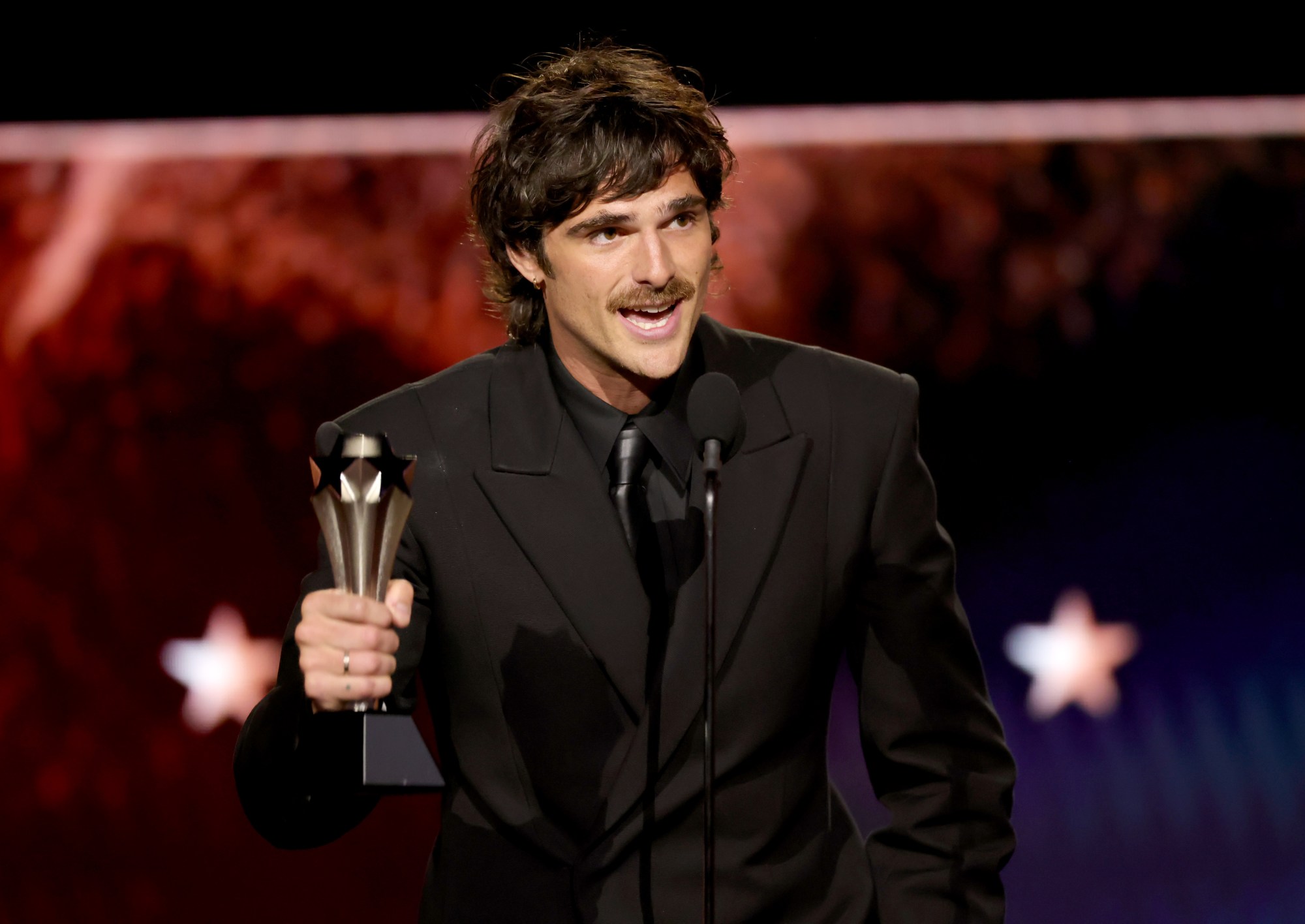
Is it as straightforward as suggesting that this current crop of young actors are being better served by the new voting demographic? I’m not sure. The new additions to the Academy have amplified more marginalized voices in Hollywood, and young men—particularly the white ones in the running this year—aren’t exactly hard done by: they lead blockbusters, make a load of money, and work with prestige directors with or without an Oscar to their name.
What does help, though, is the kind of films that are getting these men these kinds of nominations. For a while, young male actors enjoyed playing the action hero, or the two-dimensional male protector in dramas where women get the meatier, more interesting work. Chalamet’s turn in Marty Supreme is a brusque big screen performance. In most of these other cases—and you can see this in Elordi’s bruised and confused Creature, or Lucas Hedges’ sad turn in Manchester By the Sea, or Paul Mescal’s depressed dad in Aftersun, or even Chalamet’s own Elio—there’s a willingness to reward vulnerability.
As they pivot to the more interesting things, and the ‘prove it’ mentality applied by older male voters gets diluted by the new folks in charge, everything seems to be shifting. If those two manage to make it all the way to the Oscars and win, it’ll mark a seachange, and the end of the curse.