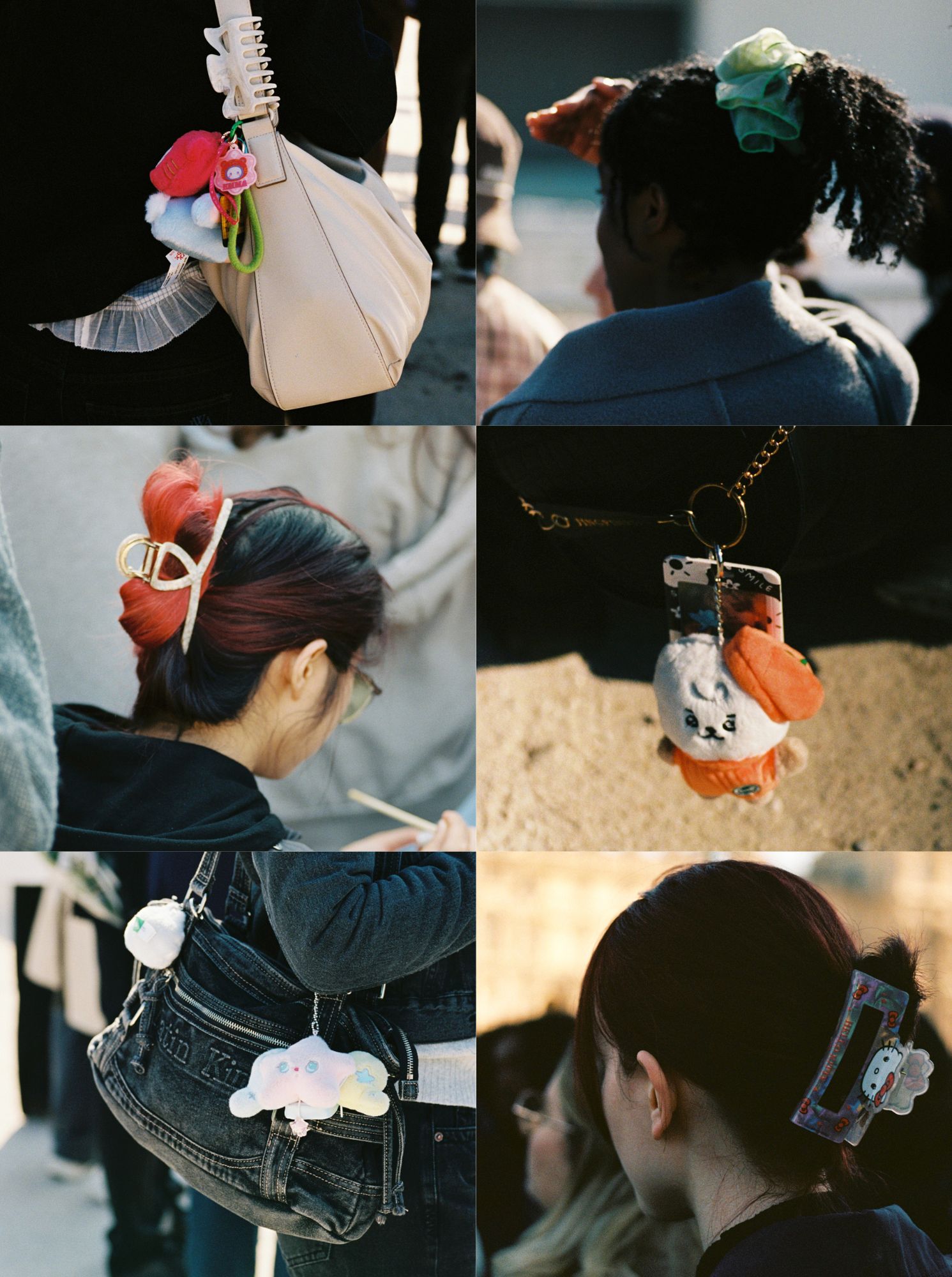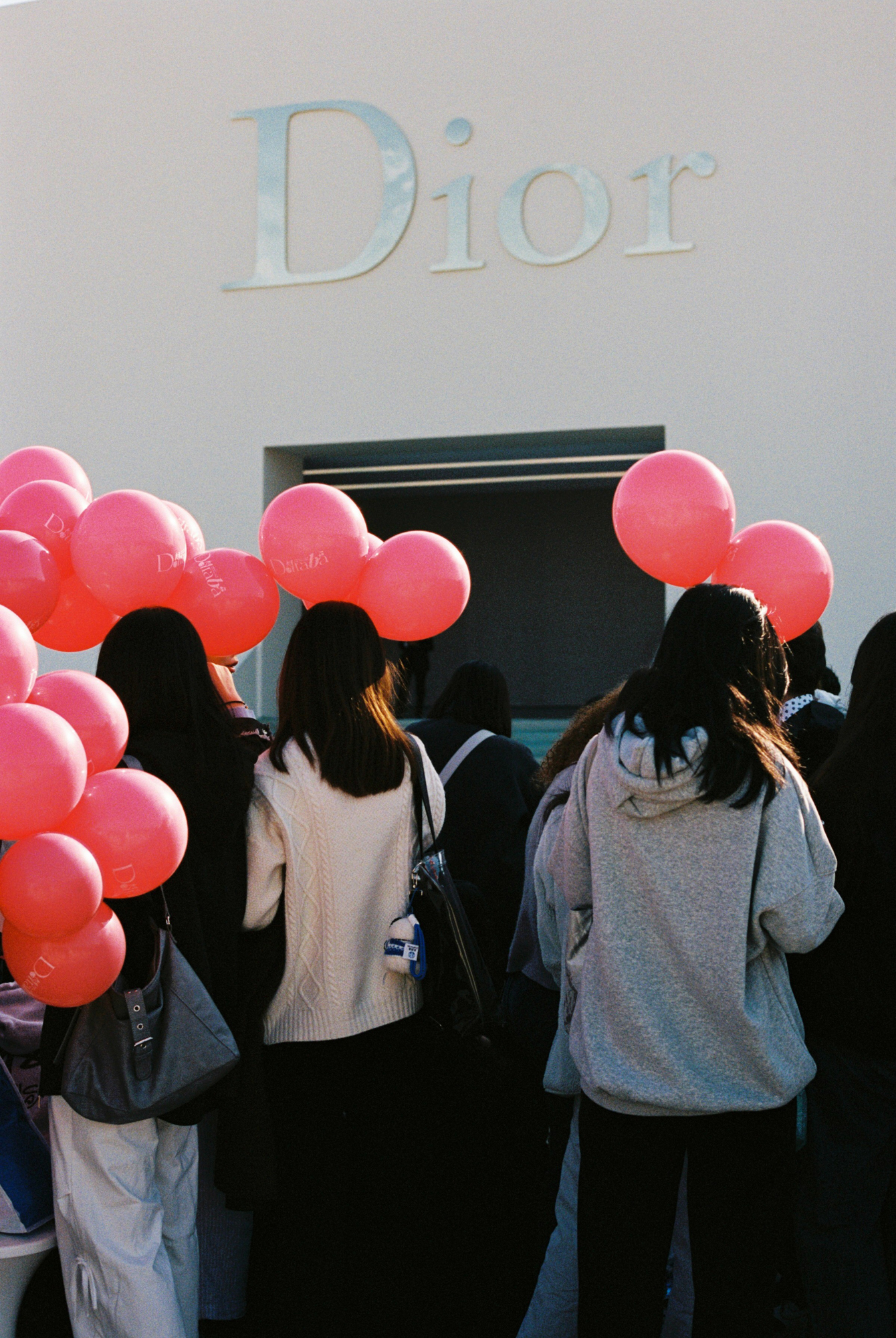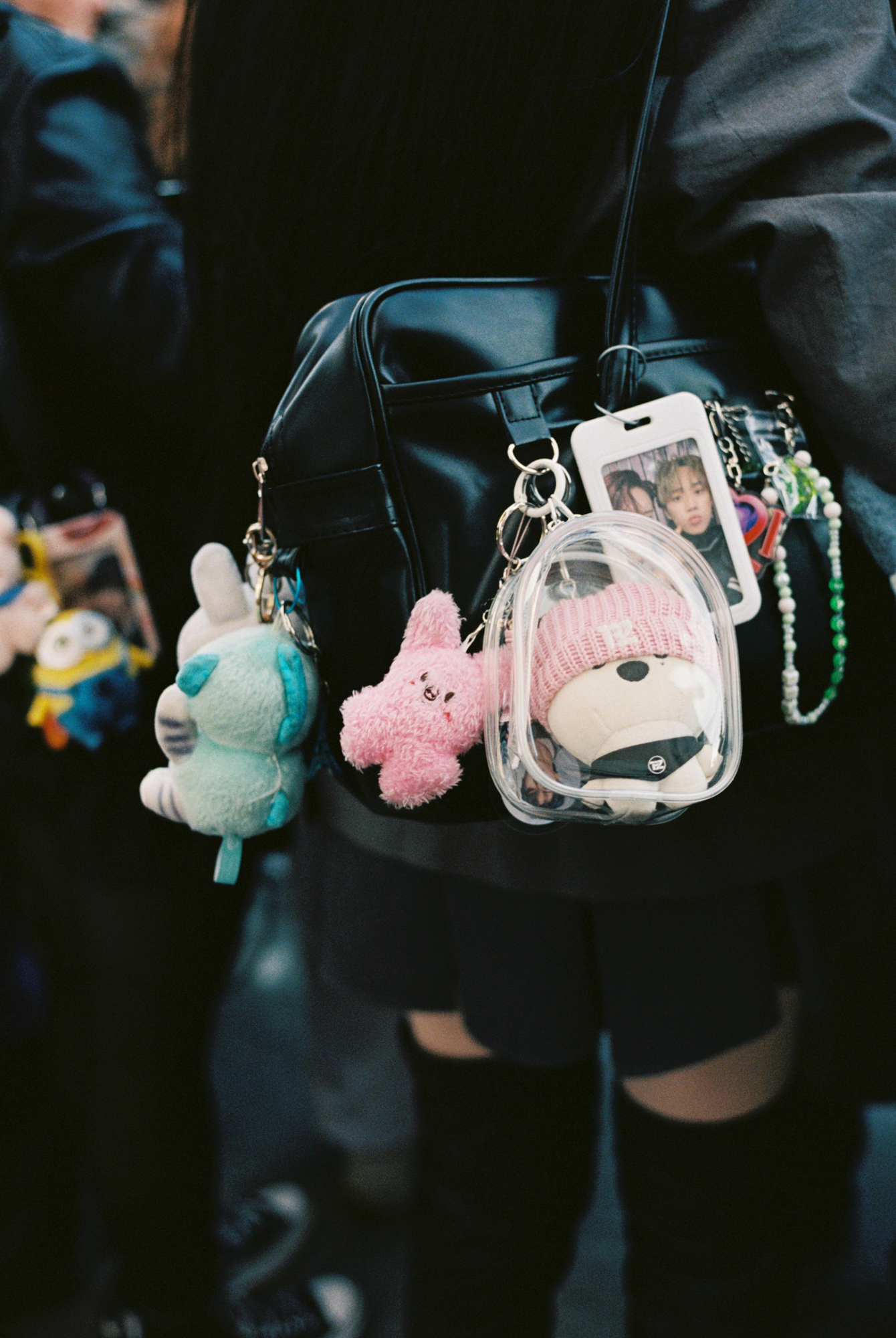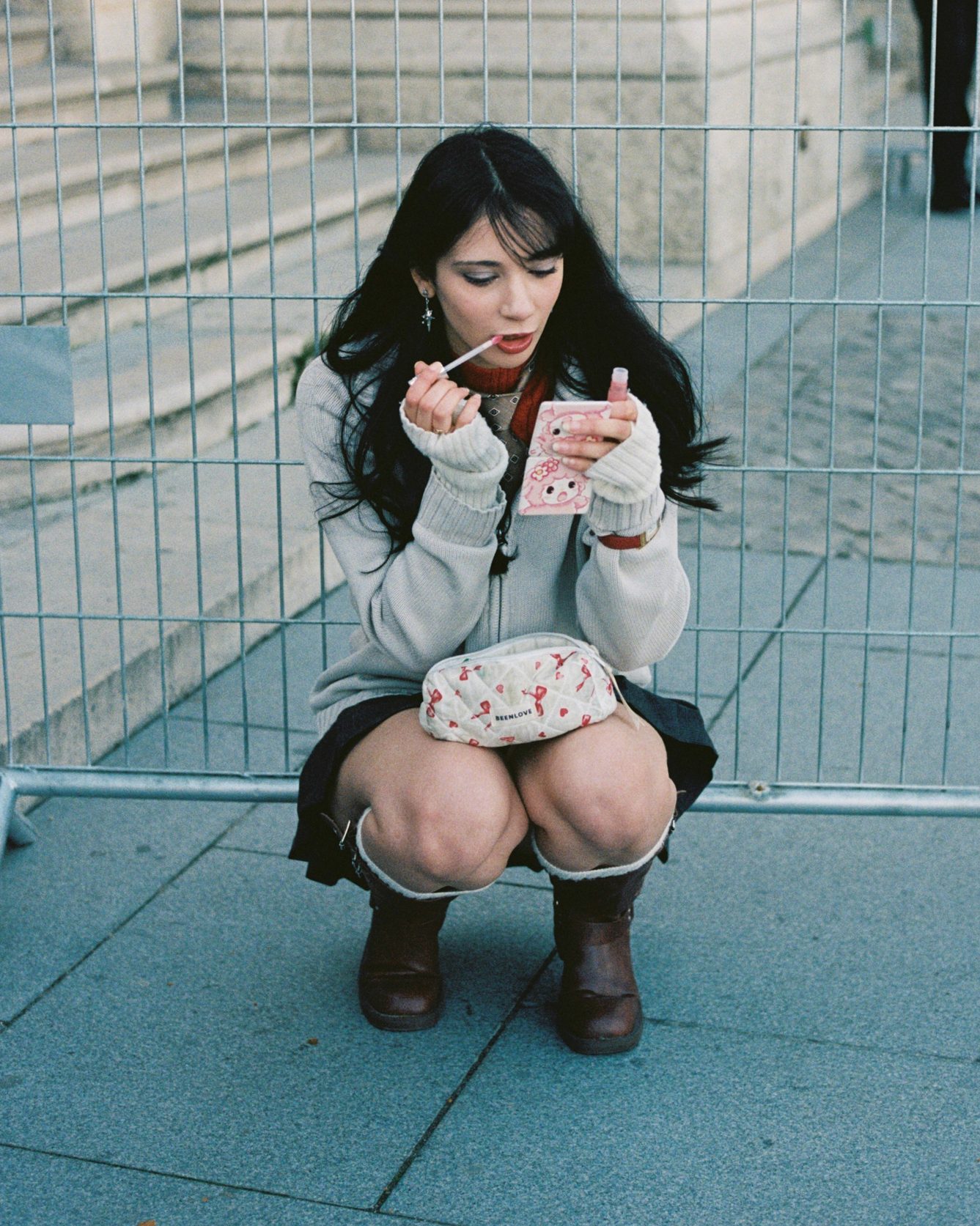
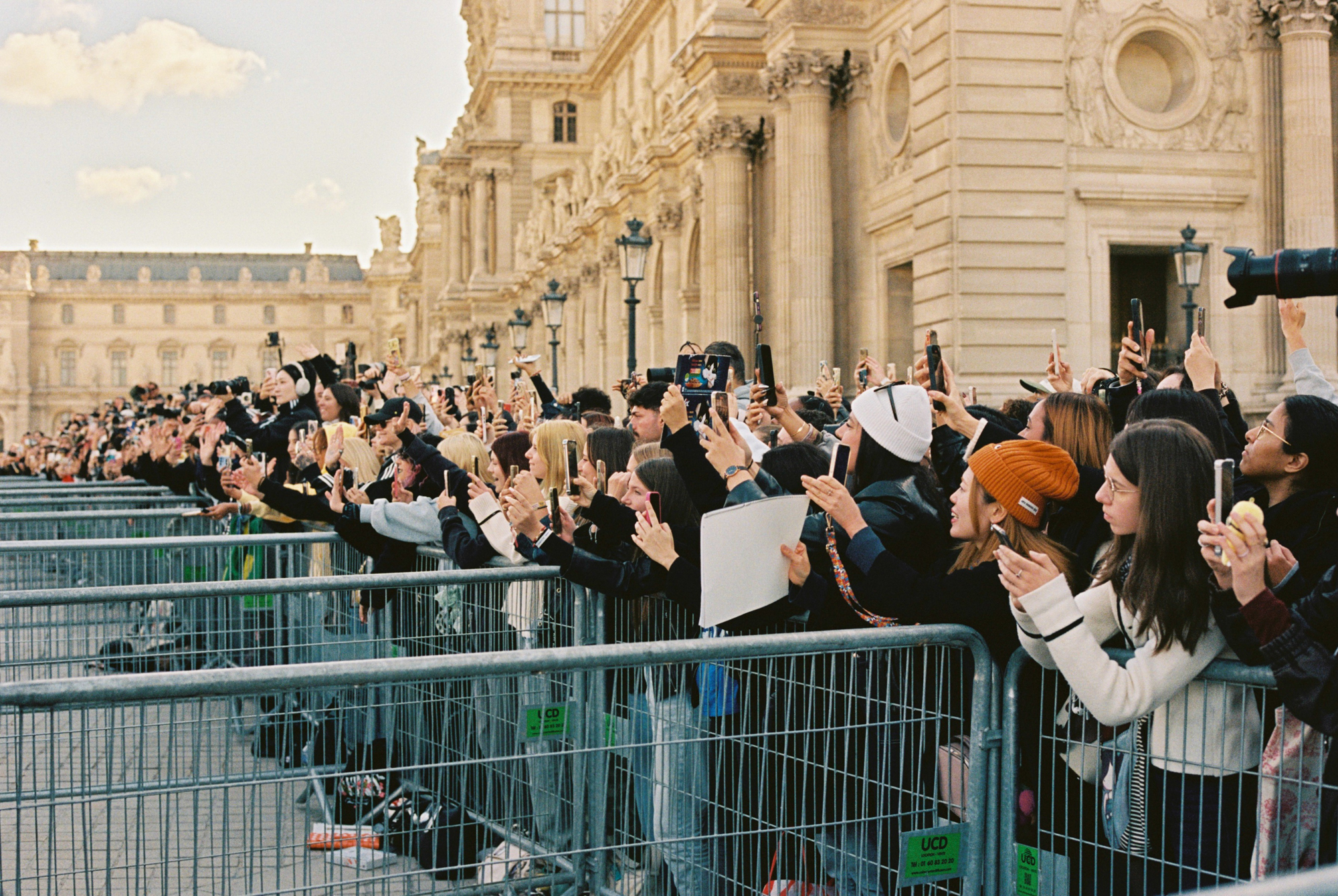
While everyone else was cavorting the streets of Paris in search of celebrities and flamboyant outfits, Spanish photographer Claudia G. Casanova focused on something else. For hours at a time, as fashion icons and the ultra-famous were ushered past red tape, a group of young people, most of them women, waited patiently behind a barrier. They were hoping to catch a glimpse of their favorite K-Pop idol.
In Europe, opportunities like this are rare. It’s expensive to bring stars from bands like Blackpink and BTS overseas, and most of the time fans never see them up close, only onstage at stadium shows. A brief walk and wave from a car to a venue door feels almost mythical. It’s precious, exhilarating, and often a once-in-a-lifetime experience for a true fan.
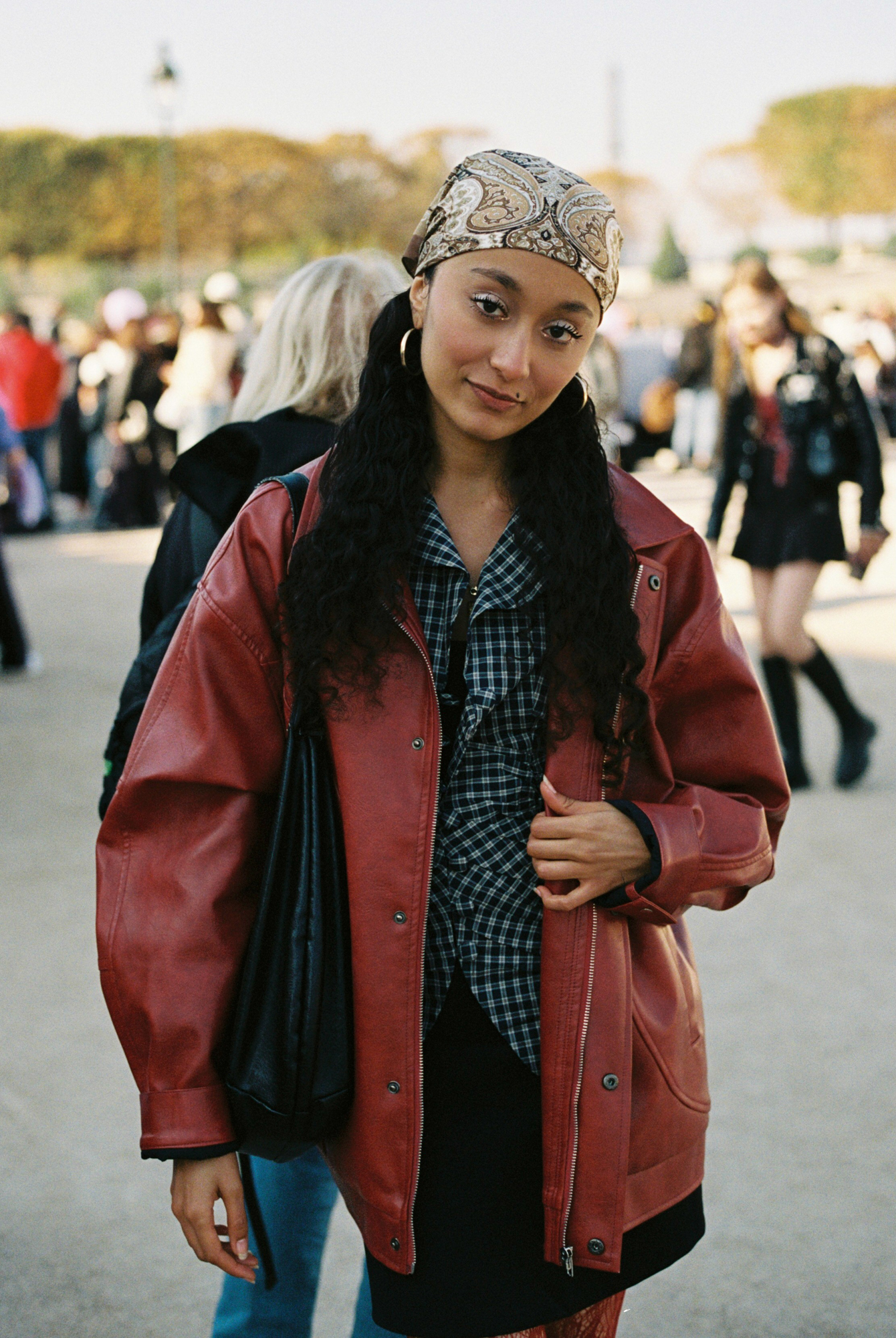
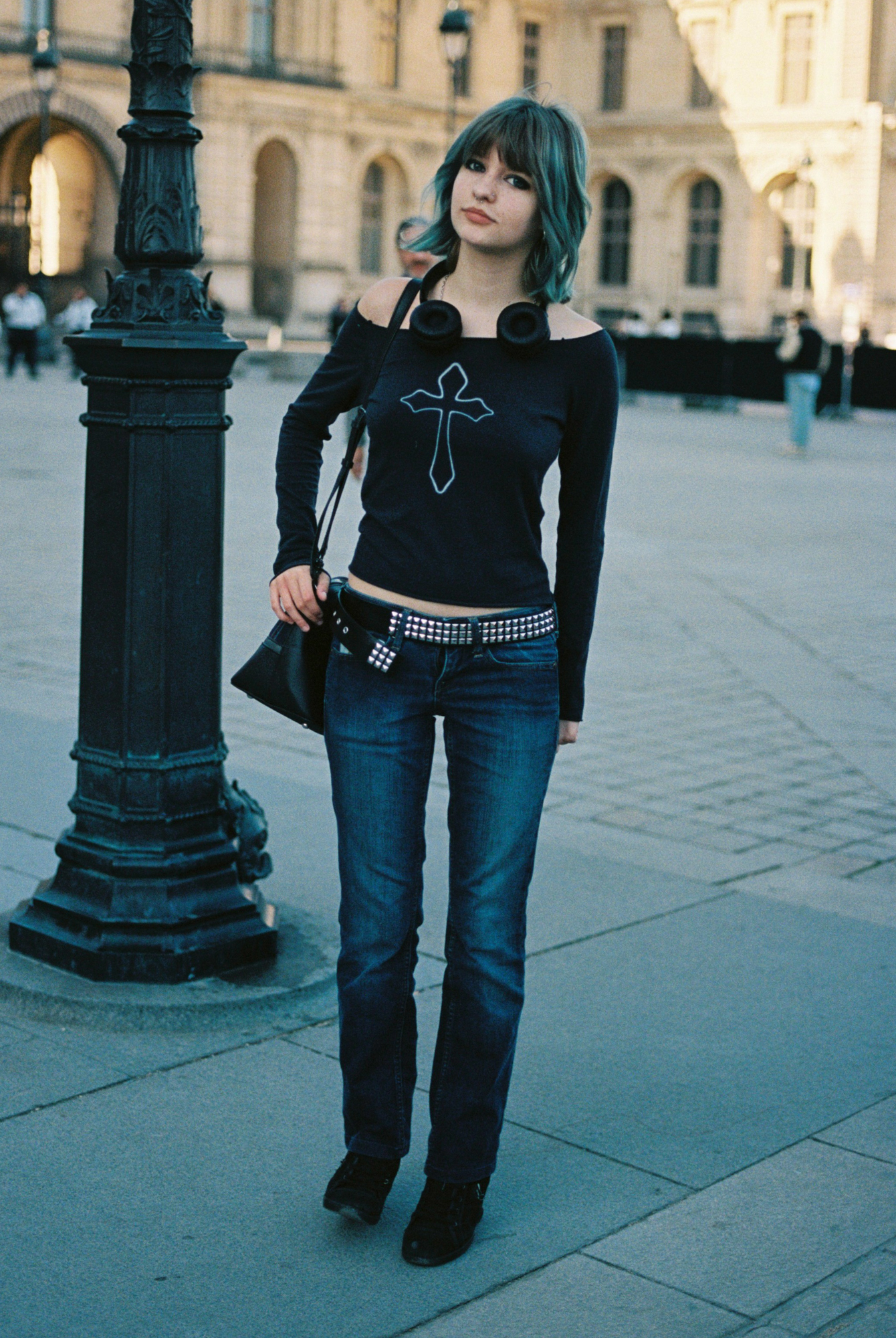
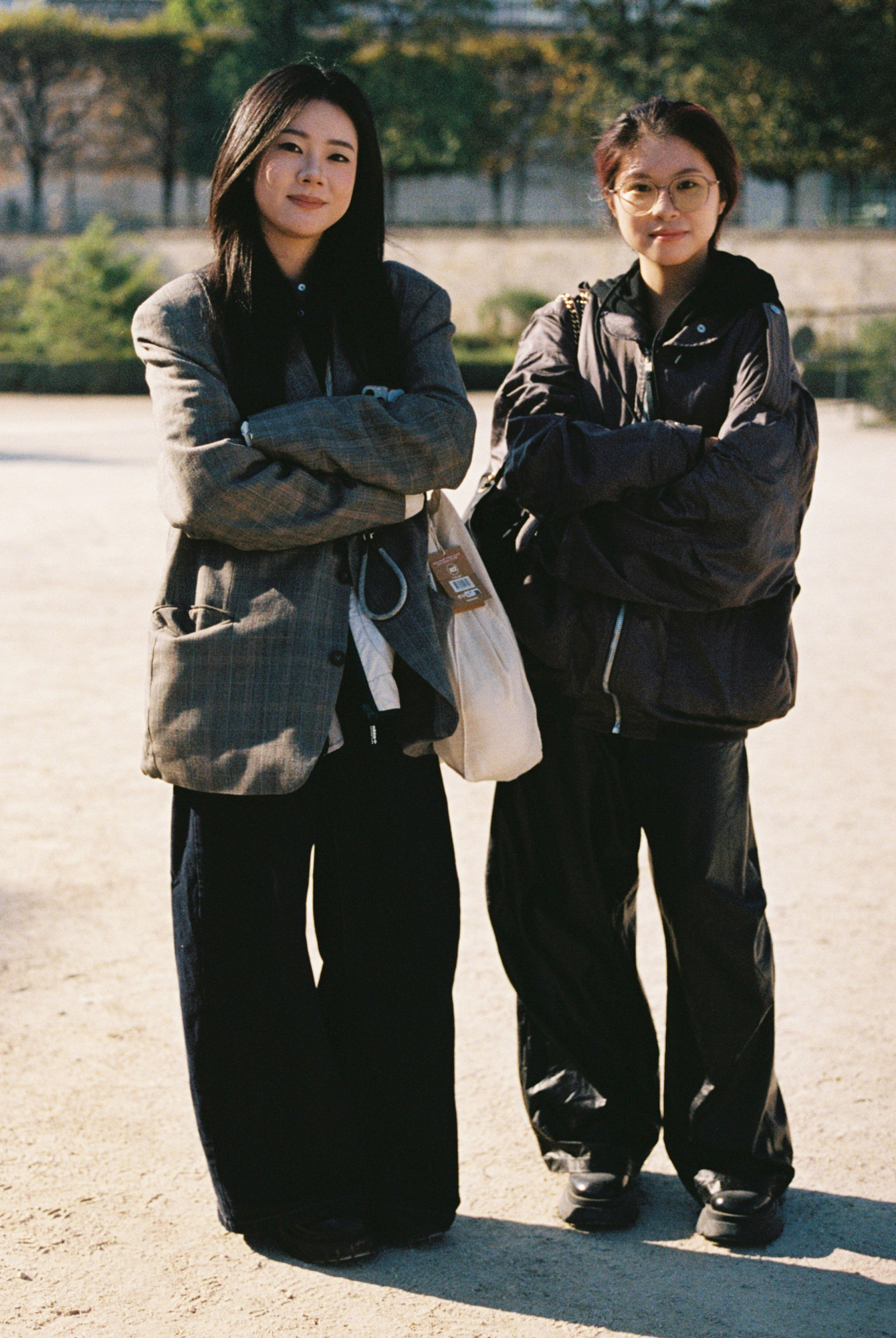
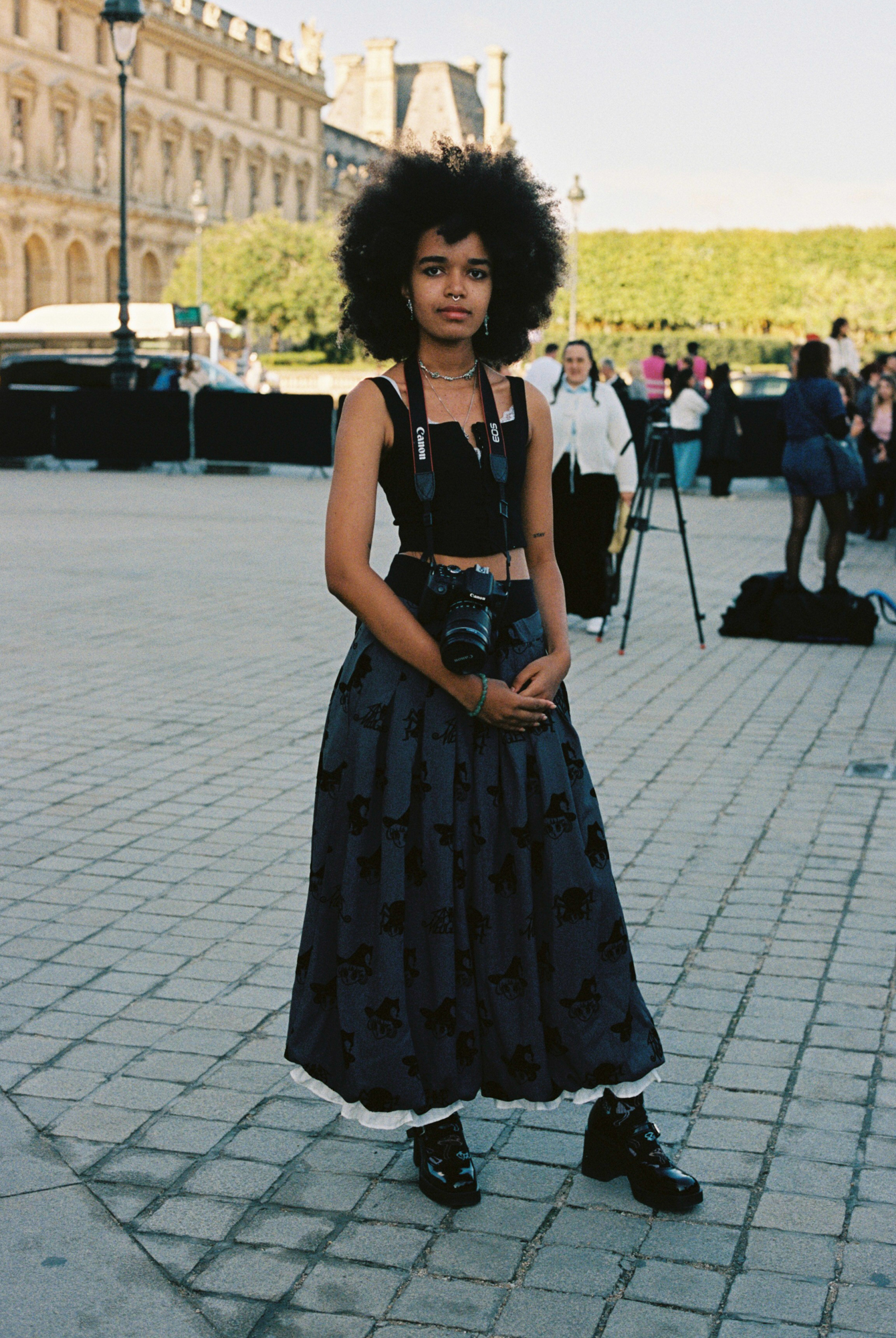
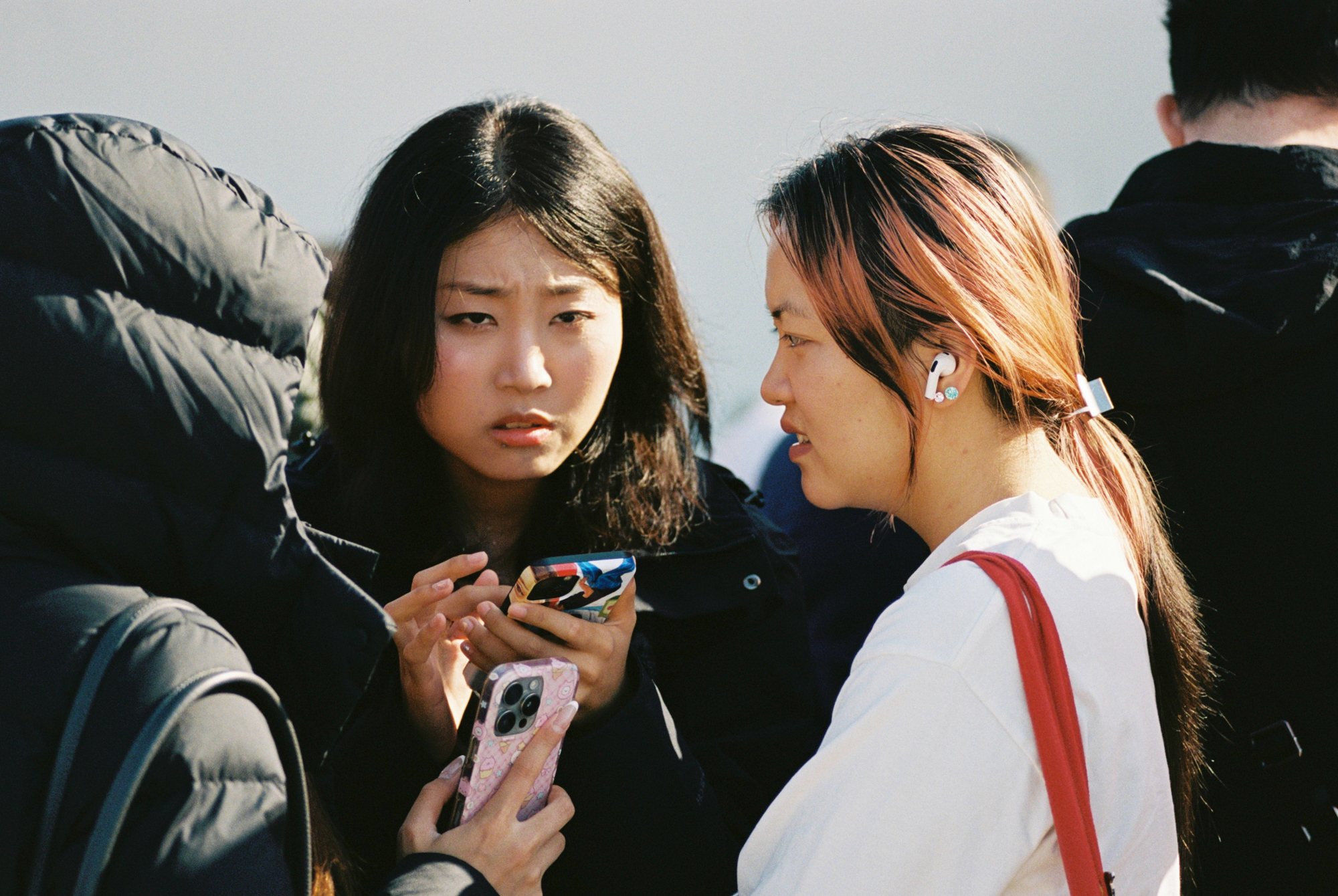
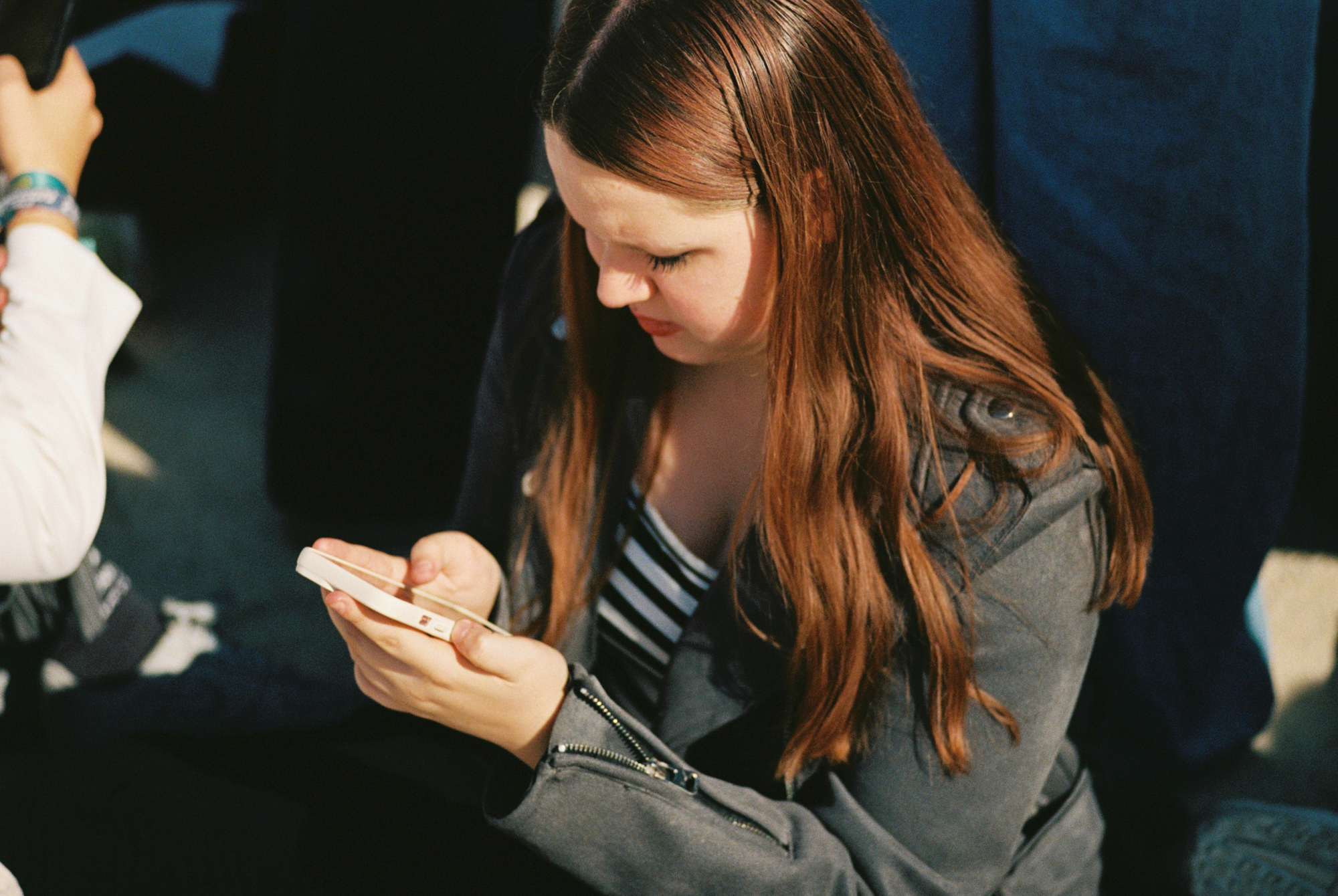
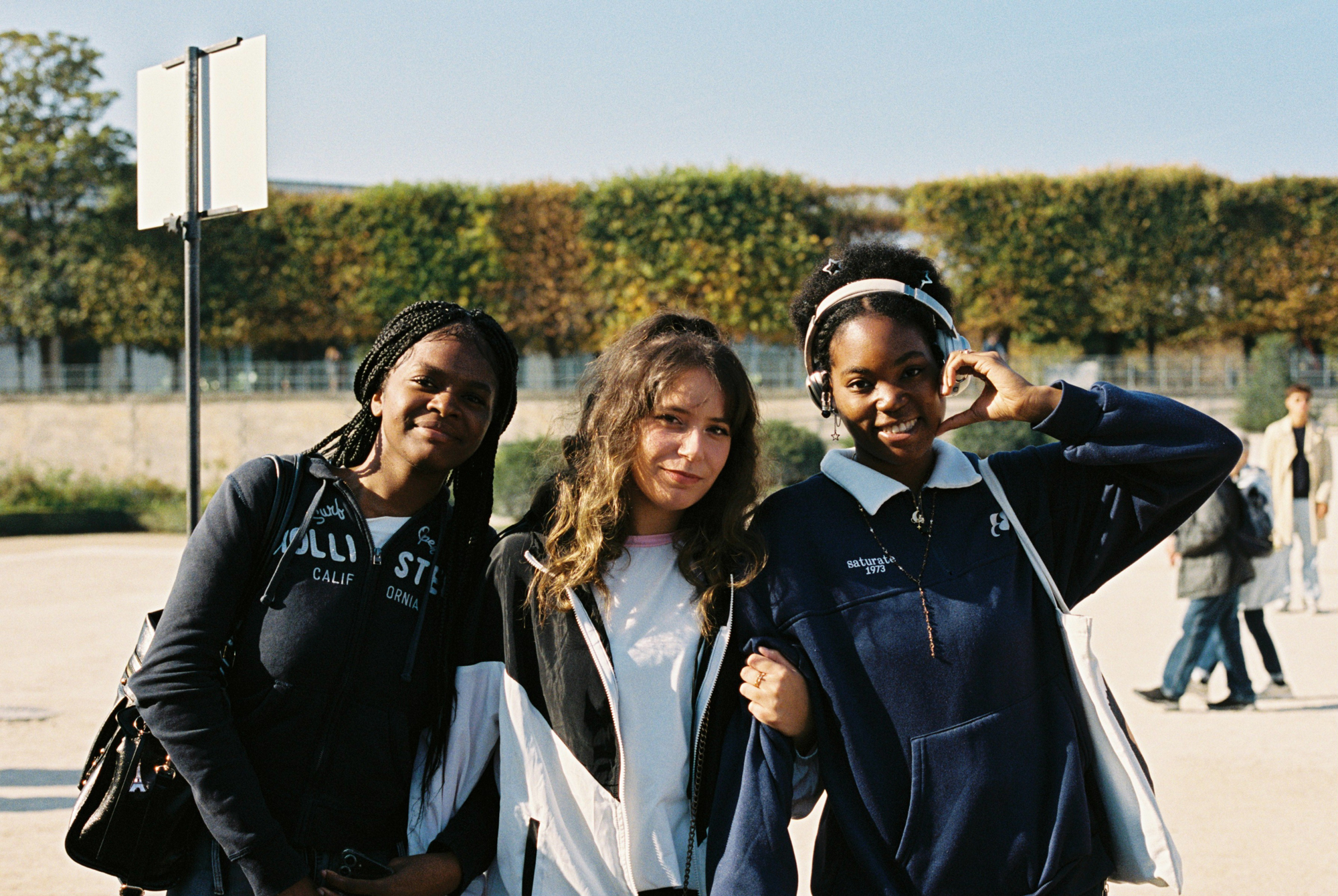
Unbothered by the outfits or the frantic dash to capture a non-blurry photo of someone famous, Casanova instead turned her attention to the crowds behind her, waiting for their beloved K-pop idol. The photographs she took—a mix of posed portraits, candid shots, and detail images that echo the close-ups of a fashion collection (this time featuring a Labubu clipped to a purse)—lay the groundwork for a project dedicated to the generosity and passion of fandom.
Along with an exclusive look at her work, Casanova tells us about the people she met, the origins of the project, and how she hopes it recontextualizes the way we see young fans.
Tell us about the moment you decided to make this a project.
I started attending fashion week as a photographer a few years ago to shoot street style outside the shows, but it never really fulfilled me creatively. It felt repetitive, like everyone was photographing the same people and the same moments. I’ve always been more drawn to the social side of fashion rather than its aesthetics, so seeing how the K-pop movement was taking over these fashion shows, especially in Milan and Paris, fascinated me. There’s a certain irony in events organized by multimillion-dollar luxury brands being surrounded by crowds of fangirls waiting for their idols. The contrast between these two worlds made me realize there was a story to be told.
Are you a K-pop fan?
To be honest, I’ve never been a big fangirl myself, and I wasn’t originally a K-pop fan either. But I grew up with my sister and friends being huge fans of boy bands, so I’ve always felt connected to this side of girlhood, even though I never experienced it firsthand. I see myself more as an observer: I love how people create communities and bond through the things they love, which in this case is music. I’m interested in exploring different fandoms with the same curiosity rather than belonging to one myself. That said, I did do my K-pop homework before starting this project and listened to a lot of the artists!
Did you meet any memorable characters?
There was a group of girls from South Korea, some of whom I photographed for the project, who had been waiting outside one of the Paris shows for five hours. They came incredibly prepared with professional cameras and even small stools. I also met a group of girls fully dressed in lilac. They were completely surrounded by balloons and they were handing out flyers explaining their project. It was a kind of welcome or greeting for their idol, similar to what you’d see at a concert. In general, every girl I photographed had something unique about her and the way she integrated her love for K-pop into her style and self-expression. They all take it very seriously.
Do you think they’re misunderstood?
Society has always undermined girls’ interests. When something has a largely male fan base, it’s considered important or legitimate, but when the fans are young women, it’s often dismissed as obsessive or unserious. The reality is that being part of a fandom requires dedication and time, and it can play an important role in the how these girls express themselves and connect with others. This kind of devotion may not be understood by everyone, but It’s what I admire most about them. It’s a crucial part of their personal development and how they experience girlhood.