
In The David Bowie Centre, newly opened at London’s V&A East Storehouse, the artist’s iconic outfits make up barely a fraction of the 90,000-item strong archive. Compiled from Bowie’s own belongings, which his estate donated to the V&A in 2023, there’s the expected big-ticket iconography (his powder-blue Ziggy Stardust suit, and the striped Kansai Yamamota-designed bodysuit) and stranger things (sheaves of perfectly preserved fan mail, the HELLO! magazine cover for Bowie and Iman’s wedding). It’s the most comprehensive collection of the actor, singer, and style legend’s personal items yet.
Walking through the doors, you’re immediately given an intimate crash course in the pop culture keeping Bowie’s influence alive. The archive’s interactive Library of Connections traces the artist’s acolytes—from Prince, to Tilda Swinton, to Chappell Roan—as well as the countless uses of his music in film and TV. I’d put money on the V&A East Storehouse being the only museum in Britain currently displaying a copy of Happy Feet Two.
You would struggle to find an object in the archive that doesn’t count as quirky or eccentric—that was, after all, kinda Bowie’s whole deal. But guided by curator Dr Madeleine Haddon, I went on the hunt for the things even his most die-hard fans might have forgotten about, or didn’t even know existed in the first place. Here, in Haddon’s words, is the story behind those rare, treasured pieces.

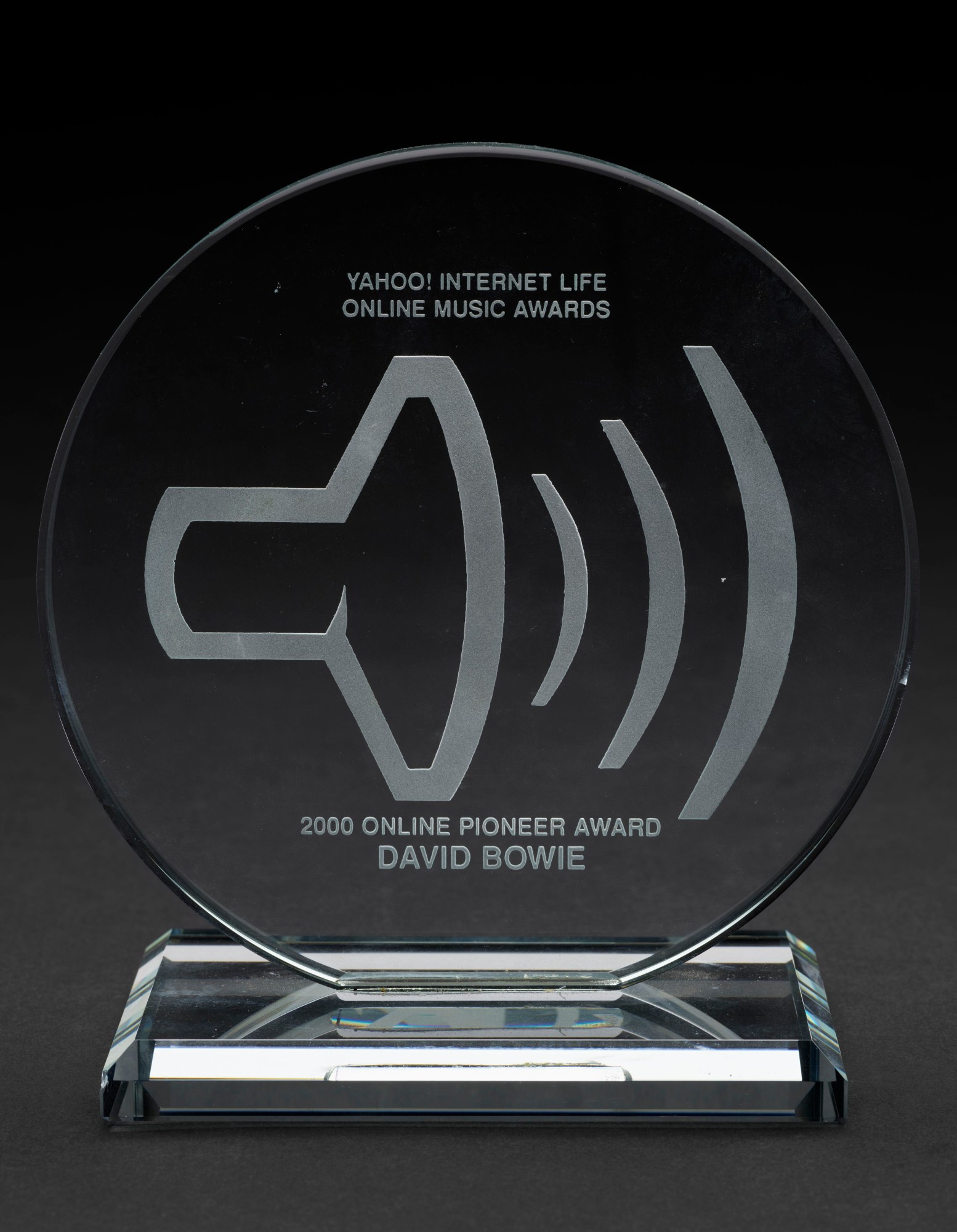
His Online Pioneer trophy from the Yahoo! Internet Life Online Music Awards
“Bowie was one of the first artists to really embrace the internet. He was one of the first to release his music exclusively [online.] He created BowieNet and became one of the first artists to create his own website, and Bowiebanc.com, which is an online banking system. He embraced all of this technology before many of his contemporaries. He received the Online Pioneer award in 2000 from the Yahoo! Internet Life Online Music Awards [because of that.] I mean, does anyone even remember that this existed?”

A letter of recommendation from his father
“This is a letter that Bowie’s father wrote on his behalf to a law firm recommending him for a job, speaking to how he can do anything that he sets his mind to. It’s such a loving testament from a father to his son.”
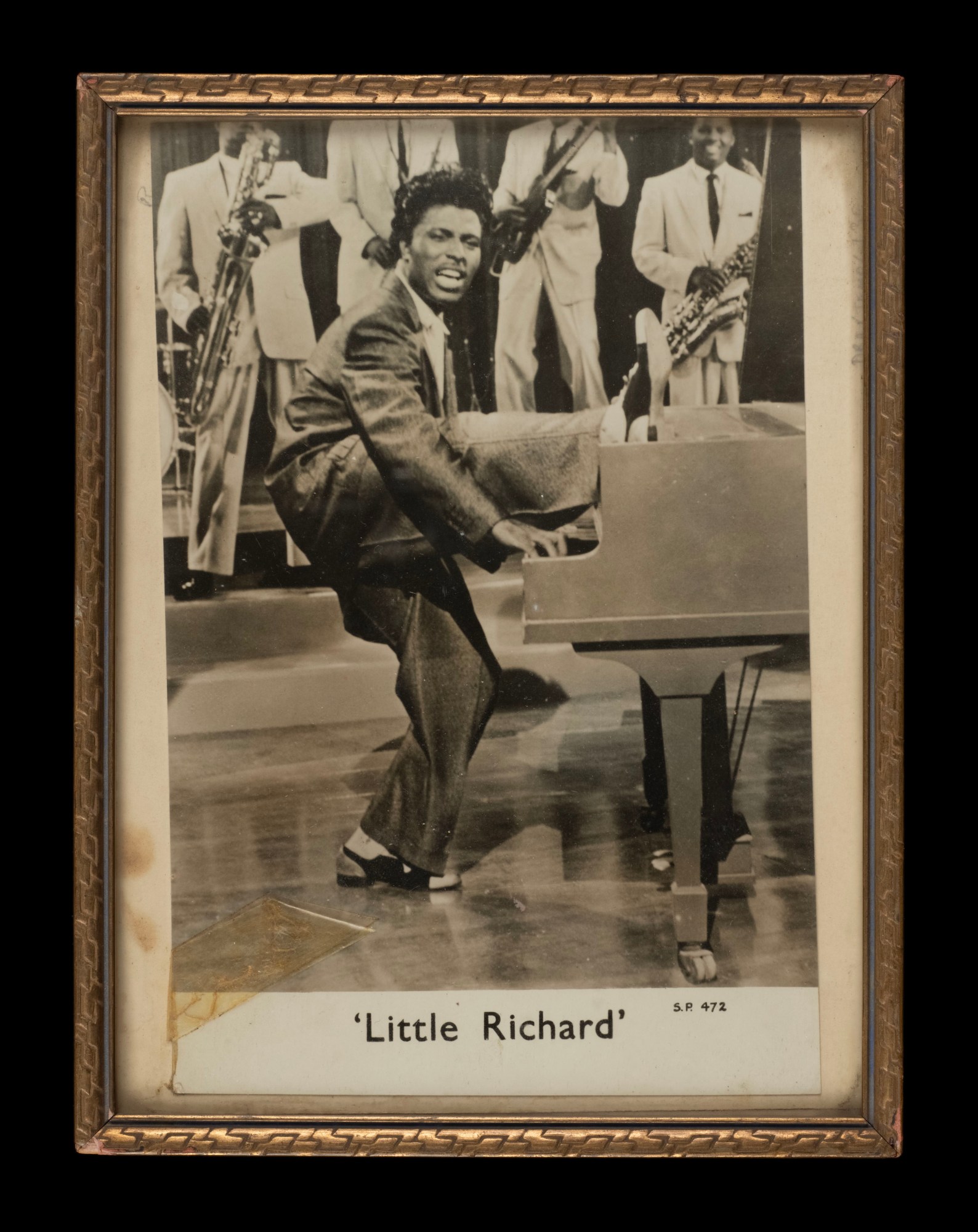
His framed photograph of Little Richard
“This is one of the oldest objects we have in the archive. It’s a photo that Bowie bought at a very young age, put in this frame, and kept it by his bedside. It’s described as one of the most treasured objects he had throughout his life. He’s been quoted as saying if it hadn’t been for Little Richard, he never would have become a musician.”
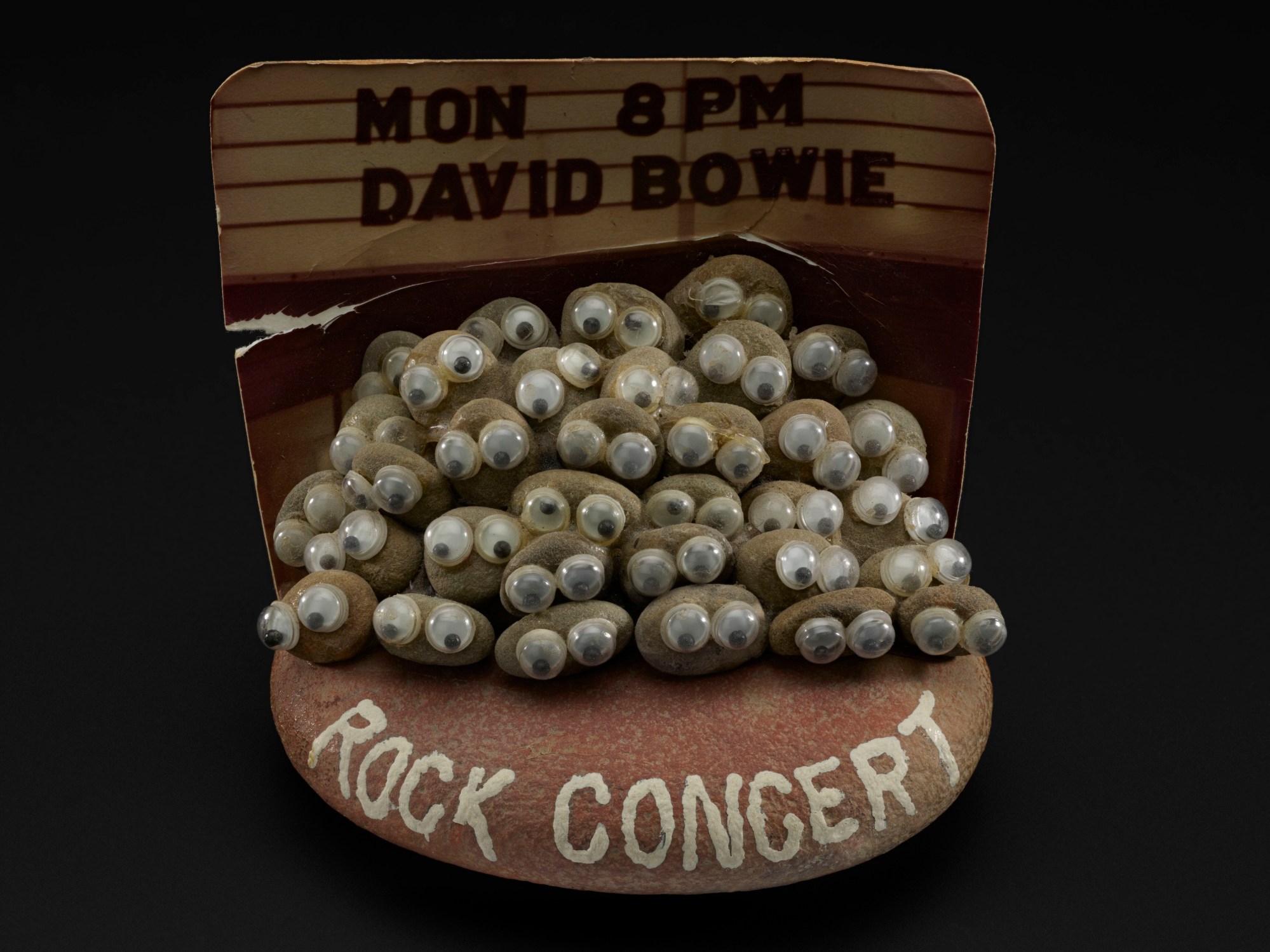

All of his fan art, including a Bowie “rock concert” and Ziggy Stardust figurine
“He had an incredible collection of fan art and objects like this, and letters that he was sent. I remember, at times, I was crying while reading some of them, hearing [his fans] talk of how he changed their lives. He treasured all of it, catalogued it, and felt that it should be in the V&A. We had to make a selection in the end and I tried to choose what speaks to that breadth.”

Golden winged cowboy boots from the Glass Spider Tour
“The Glass Spider Tour was this incredibly theatrical production. It was extremely influential for [other artists’] future music performances and concert touring. When he performed the tour in West Berlin, the stage was set up against the Berlin Wall so people in East Berlin could hear the concert. They got so excited at hearing David Bowie they started rioting after—which is now seen as a really important moment that leads up to the fall of the Berlin Wall. It’s incredibly powerful given Bowie’s broader relationship with Berlin: “Heroes” is written about two lovers written on either side of the Berlin Wall. He was so impacted by the conflict when he lived there in the ‘70s, so it’s very moving that his music created an impact on the city.”

Berlin restaurant menu
“This is a menu Bowie used to place an order while recording. It has orders from him, Iggy Pop, and Tony Visconti. The fact that he saved this says so much [about him].”
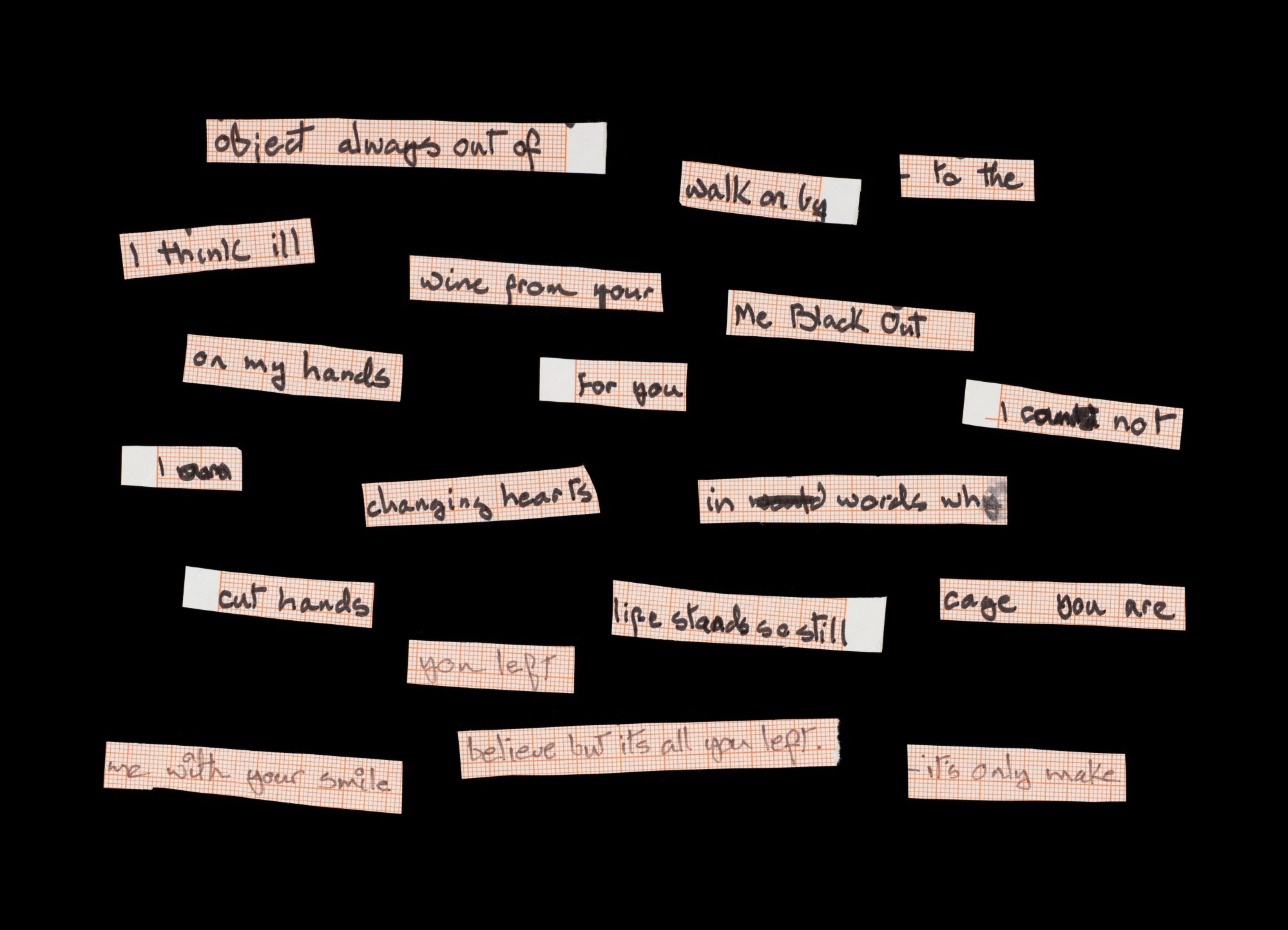
Blackout lyric cutouts
“This is a technique he learned from William Burroughs. Bowie would cut out different lyric ideas he was thinking about in order to rearrange them in unique ways. He took that even further in the ‘90s when he worked with a programme called the Verbasizer, which was developed by a computer programmer called Ty Roberts. It was able to cut up lyrics but through a computer generated programme.”


The Spectator project timeline
“This was the last project Bowie was working on before he passed away: a musical called The Spectator. He’d been working on it since 2015, and this was found on his desk when he passed away [in early 2016.] It was going to be set in 18th century London, because he was really interested in the underworld of [that era,] particularly criminals who were seen as rock stars of the day. He was charting the development of [William] Hogarth and Joshua Reynolds’ works, the formation of the Royal Academy, and thinking of London on the cusp of modernity. It’s interesting that he returned to London at the end of his life and that he was also thinking about the evolution of the musical genre. It really shows that he was working across all genres until the very end of his life.”
Tickets for the David Bowie Archive at V&A East Storehouse, Hackney Wick will be available here soon.
images THE DAVID BOWIE ARCHIVE / THE DAVID BOWIE ESTATE courtesy of THE V&A